7-Day Pescatarian High Fibre Meal Plan
Our 7-day pescatarian meal plan has been on this blog for years, and this is the version built around fibre. It is a full week of breakfasts, lunches, dinners and snacks for two, where every single day gets to at least 30g of fibre, there is fish or seafood every day, and every figure is worked out from the recipe it links to.
Fish has no fibre at all, so the work is done by whatever sits next to it. That is why the pollock roasts on a tin of cannellini beans, the salmon comes with a full stir fry, the fish stew has chickpeas in it and the mussels come with wholemeal bread. Pulses, vegetables, oats and fruit do the rest.
Breakfast is the one meal Matt and I never share. He will not eat anything sweet first thing and puts avocado in everything he can, whereas I cannot stand avocados. So the weekday breakfasts alternate between avocado baked eggs and overnight oats, and if either one is not for you, swap it for the other. Every day still clears 30g either way.
I have written it Monday to Sunday because that is how our week runs, with the big shop on a Monday. That is also why the end of the week leans on the cupboard, with an anchovy pasta on Friday and, on Sunday, an aloo gobi that needs only a handful of ingredients.
How it works
The NHS says adults should aim for 30g of fibre a day, and that most of us only manage about 20g. Every day in this plan gets to at least 30g, and the week runs from 36 to 42g. The figures come from each recipe’s card, worked out ingredient by ingredient from the USDA’s FoodData Central database, and the extras that are not recipes, like fruit, yoghurt and bread, are counted the same way.
Pulses and vegetables do most of the heavy lifting. The aloo gobi, with its cauliflower, potato and chickpeas, has 17g a portion. The calamari and Greek chickpea salads have 11g and 10g, the beans and tomatoes under the pollock bring 8g, the teriyaki stir fry has 11g and a bowl of the parsnip and apple soup has 12g. Oats add about 8g a jar, two slices of wholemeal bread add 4g, and the snacks follow the NHS’s own suggestions of fruit, vegetable sticks and unsalted nuts. A pear has about 5.5g, and the raspberries and almonds in the yoghurt bowl add another 8g.
If you are nearer the 20g mark at the moment, the British Nutrition Foundation advises increasing your fibre gradually, because going up too quickly can cause bloating, wind and discomfort. It also recommends drinking plenty of fluids, which for most adults means 6 to 8 glasses a day. An easy way to build up here is to leave out the snacks for the first few days and add them back in once you are used to it.
The days run from about 1,570 to 1,830 calories. The NHS puts average needs at about 2,000 a day for women and 2,500 for men, so if you need more, add another slice of wholemeal bread or a piece of fruit, both of which bring more fibre with them. Protein lands between 63 and 106g a day. The UK reference is 0.75g per kilo of body weight, which works out at about 53g for someone who weighs 70kg.
The week has just over two portions of oily fish a person, from the teriyaki salmon, the mackerel in the kedgeree and the salad, and a little salmon and anchovy in the stew and the pasta. That is within NHS guidance for most adults. If you are pregnant, breastfeeding or might become pregnant, the NHS advises no more than two portions a week, so make the kedgeree with smoked haddock, which is how it is traditionally made. That brings the week comfortably under two.
The week at a glance
Everything below is per person. The shopping list at the end covers two people for the whole week.
| Day | Breakfast | Lunch | Dinner | Snack | Calories | Fibre | Protein |
|---|---|---|---|---|---|---|---|
| Day 1 | Overnight Oats Three Ways | Greek Chickpea Salad | Roast Pollock with White Beans and Tomatoes + 2 slices of wholemeal bread | Greek yoghurt (150g), raspberries (80g) and almonds (20g) | 1,582 | 37g | 92g |
| Day 2 | Avocado Baked Eggs | Roast Pollock with White Beans and Tomatoes | Teriyaki Glazed Salmon + Teriyaki Stir Fry | A pear | 1,752 | 36g | 104g |
| Day 3 | Overnight Oats Three Ways | Calamari and Chickpea Salad | Mediterranean Fish Stew + 2 slices of wholemeal bread | Hummus (50g) and carrot sticks (80g) + an apple and almonds (20g) | 1,621 | 40g | 80g |
| Day 4 | Avocado Baked Eggs | Mediterranean Fish Stew + 2 slices of wholemeal bread | Pan-Fried Sea Bass with Crushed New Potatoes and Samphire | Hummus (50g) and carrot sticks (80g) + a pear | 1,570 | 38g | 81g |
| Day 5 | Overnight Oats Three Ways | Mackerel and Green Bean Salad | Anchovy, Tomato and Caper Spaghetti | A pear + Greek yoghurt (150g), raspberries (80g) and almonds (20g) | 1,780 | 38g | 74g |
| Day 6 | Smoked Haddock with Poached Egg and Spinach | Spiced Parsnip and Apple Soup + 2 slices of wholemeal bread | Mussels with Tomato, Fennel and Saffron + 2 slices of wholemeal bread | A pear | 1,827 | 38g | 106g |
| Day 7 | Smoked Mackerel Kedgeree | Spiced Parsnip and Apple Soup | Aloo Gobi with Chickpeas | Greek yoghurt (150g), raspberries (80g) and almonds (20g) | 1,808 | 42g | 63g |
High Fibre Meal Plan: Day 1
Breakfast: Overnight Oats Three Ways (339 calories, 8g fibre, 12g protein)
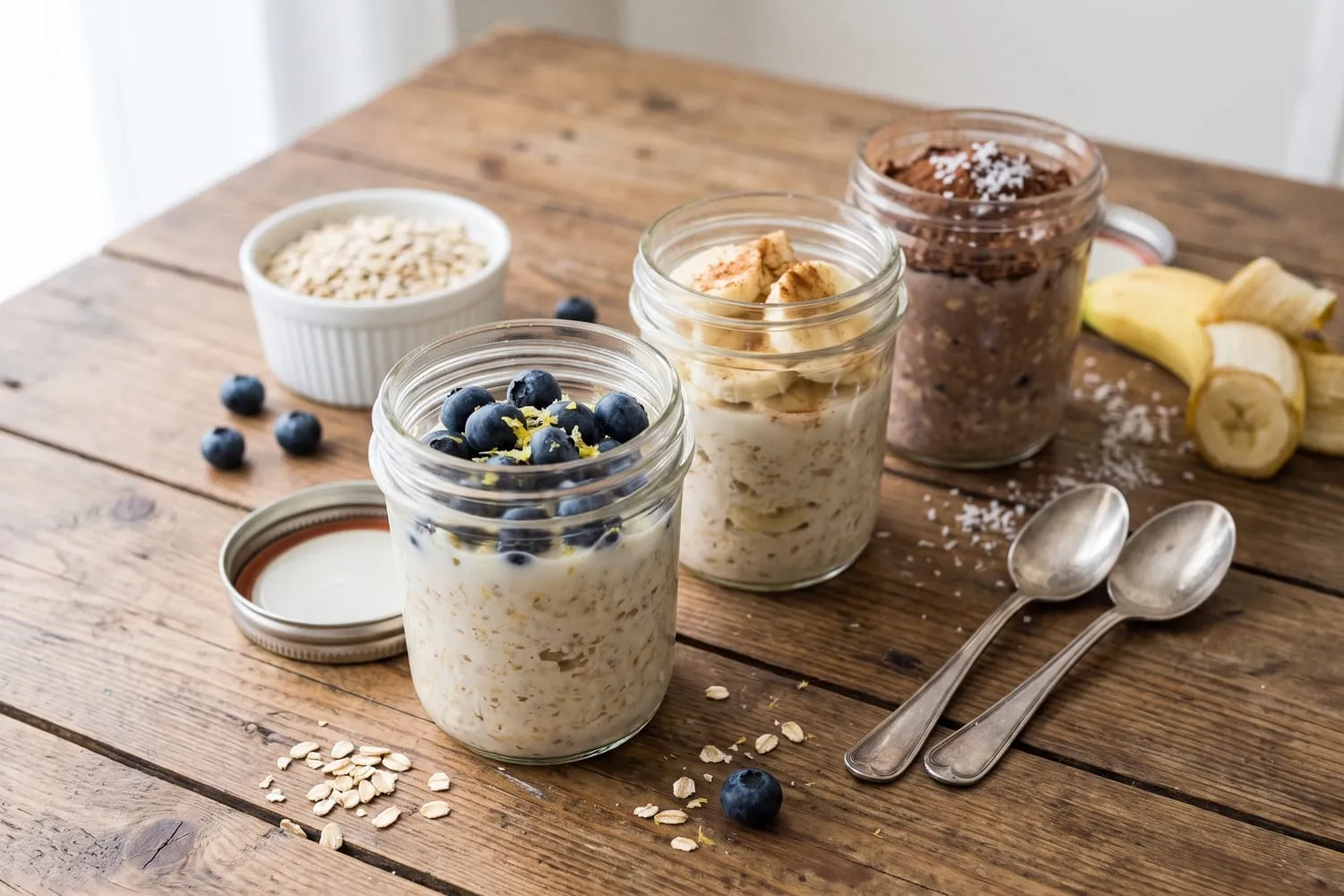
Oats and milk left to soften in the fridge overnight, finished with blueberry and lemon, banana and cinnamon, or cocoa and coconut. It is ten minutes of work on Sunday evening, and they keep for three days, so make four jars and Wednesday is covered too.
Lunch: Greek Chickpea Salad (312 calories, 10g fibre, 13g protein)
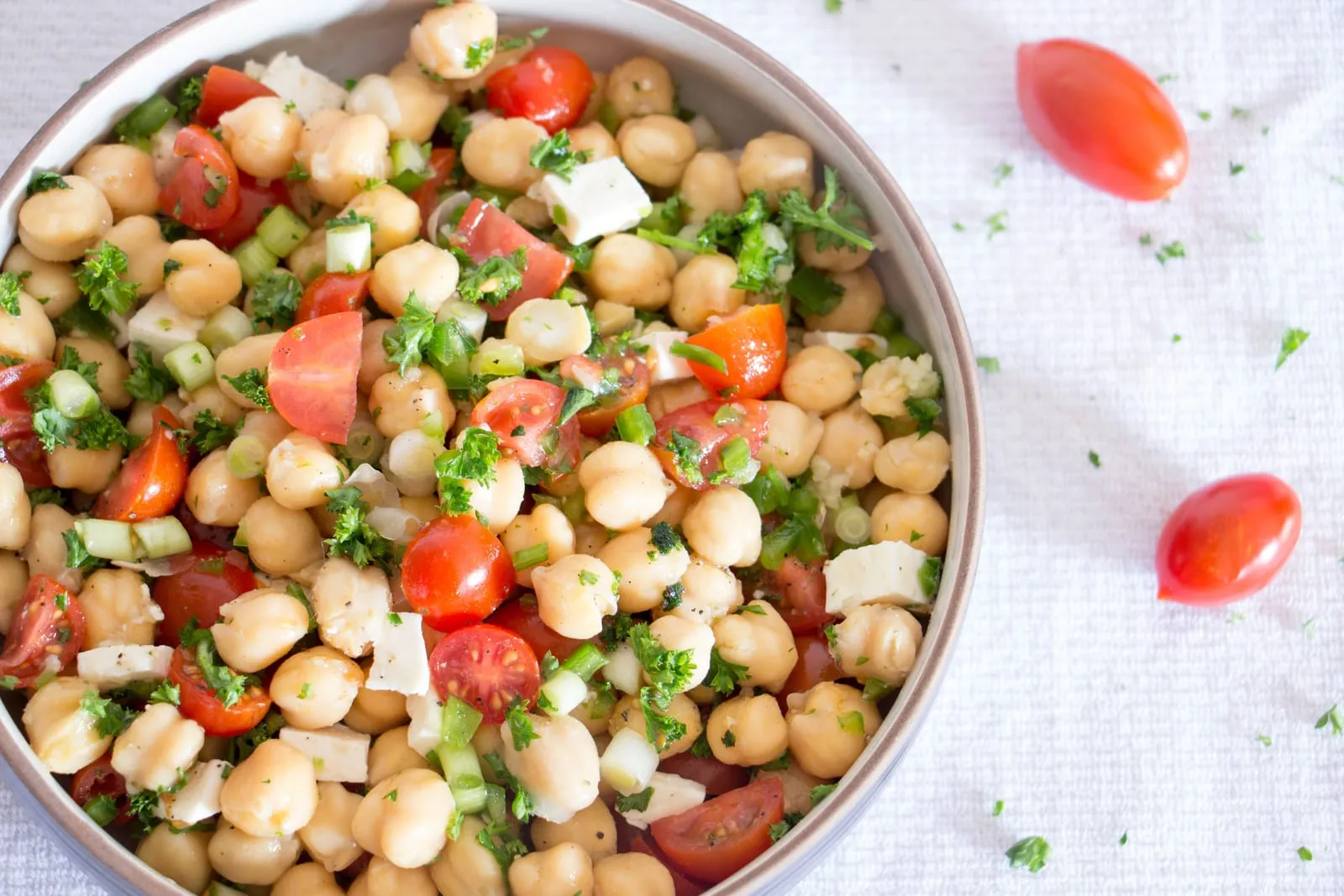
A tin of chickpeas with tomatoes, spring onions, feta and a generous amount of garlic, ready in ten minutes. I make it the night before and take it to work in a tub, and it holds up perfectly well until lunchtime.
Dinner: Roast Pollock with White Beans and Tomatoes (446 calories, 8g fibre, 40g protein)
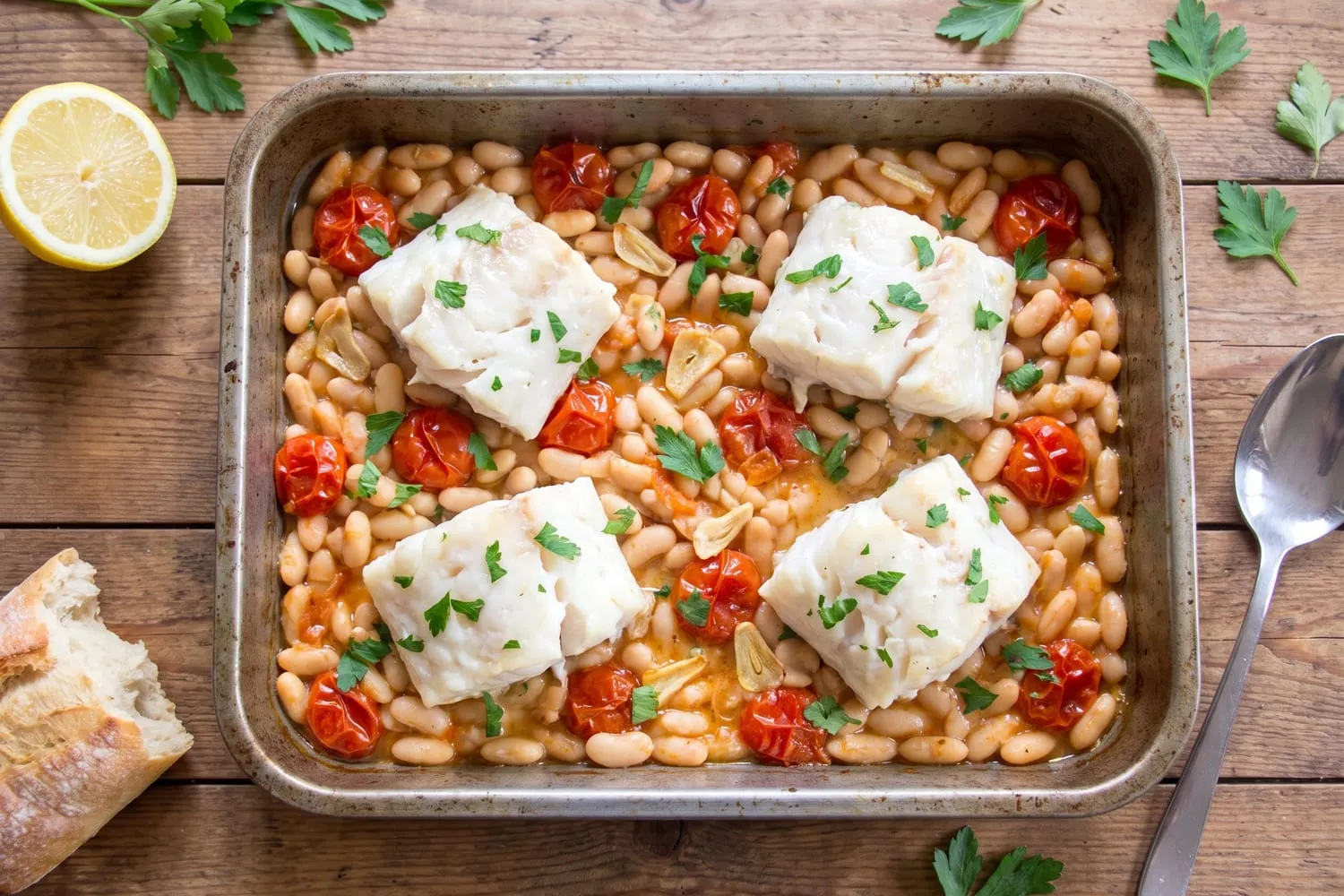
Pollock roasted on cannellini beans and cherry tomatoes in a single tin. The beans and tomatoes are where this plate gets its 8g of fibre, since the fish has none of its own. It makes four portions, so the other two go into tubs for tomorrow’s lunch, and the wholemeal bread for mopping out the tin is counted below.
Dinner (side): 2 slices of wholemeal bread (181 calories, 4g fibre, 9g protein)
Snack: Greek yoghurt (150g), raspberries (80g) and almonds (20g) (304 calories, 8g fibre, 19g protein)
Plain Greek yoghurt with raspberries and a small handful of almonds. One bowl brings about 19g of protein and 8g of fibre.
Day 1 total: 1,582 calories, 37g fibre, 92g protein
High Fibre Meal Plan: Day 2
Breakfast: Avocado Baked Eggs (397 calories, 10g fibre, 17g protein)

Two eggs baked in a halved avocado, three minutes of prep and fifteen in the oven. This is Matt’s breakfast through and through. If you hate avocado as much as I do, have the overnight oats instead and the day still comes in over 30g.
Lunch: Roast Pollock with White Beans and Tomatoes, leftovers from Day 1 (446 calories, 8g fibre, 40g protein)
Last night’s pollock and beans. The recipe is honest that the fish does not reheat as well as the beans, which are arguably better on the second day. The FSA advises eating leftovers within two days, and this is well inside that.
Dinner: Teriyaki Glazed Salmon (422 calories, 1g fibre, 32g protein)

Salmon marinated in a homemade teriyaki sauce, then pan-fried and glazed until it catches at the edges. It needs at least two hours in the marinade, so get it into the fridge in the morning. On its own it has next to no fibre, which is why it comes with the stir fry below.
Dinner (side): Teriyaki Stir Fry (386 calories, 11g fibre, 14g protein)

Broccoli, carrots, peppers, green beans and cashews tossed in teriyaki sauce, in under twenty minutes. The salmon recipe suggests white rice. Served with this instead, the plate goes from next to no fibre to about 12g. On its own, it is also what we fall back on when it has been one of those days.
Snack: A pear (101 calories, 6g fibre, 1g protein)
Day 2 total: 1,752 calories, 36g fibre, 104g protein
High Fibre Meal Plan: Day 3
Breakfast: Overnight Oats Three Ways, from Sunday’s batch (339 calories, 8g fibre, 12g protein)
The last two jars from Sunday evening, still inside the three days they keep for.
Lunch: Calamari and Chickpea Salad (449 calories, 11g fibre, 29g protein)
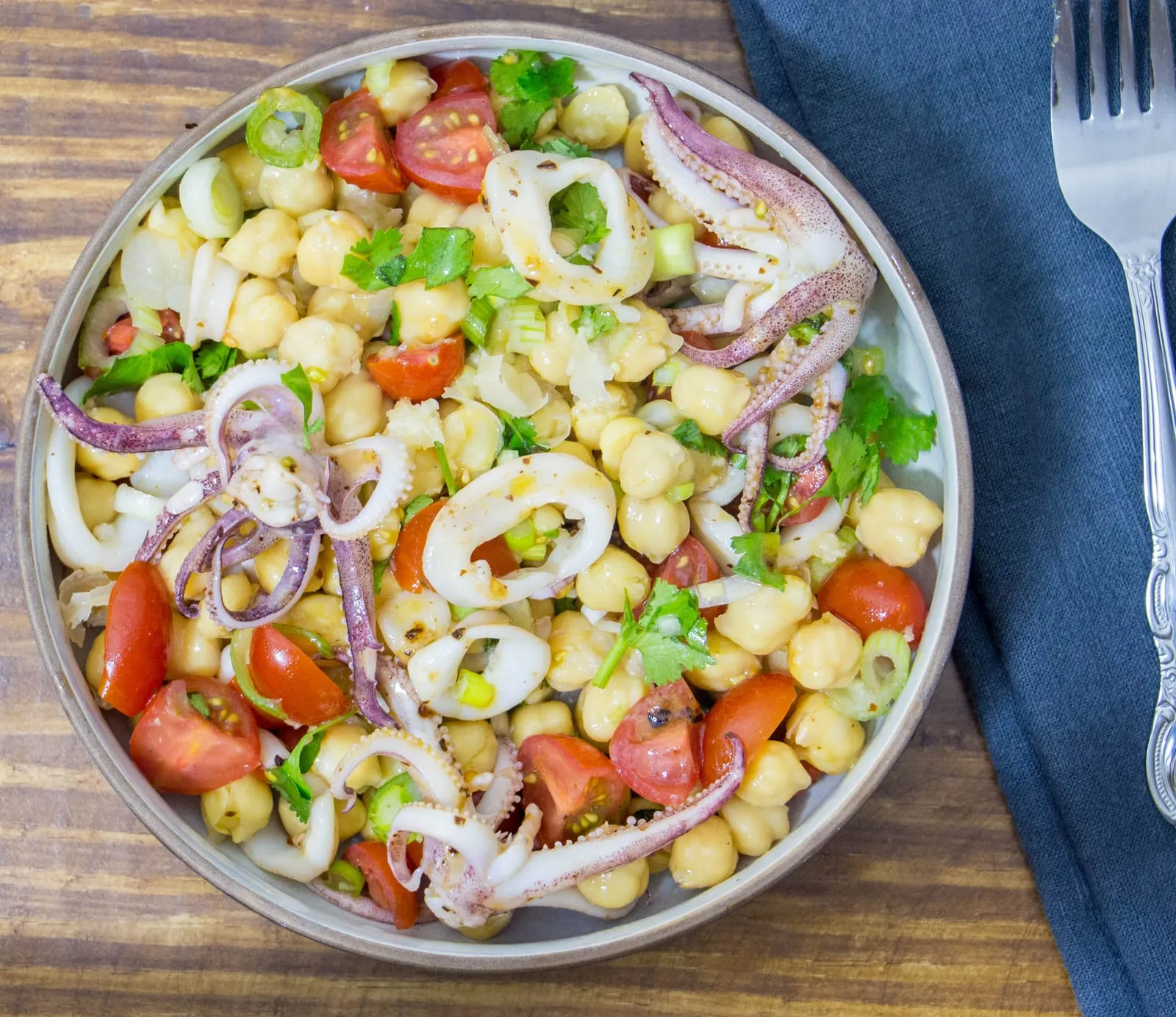
Calamari fried hot and fast for about two minutes, then tossed through chickpeas, tomatoes, spring onions and parsley. It keeps in the fridge until the next day, so it can be made the night before, and with 29g of protein and 11g of fibre it does both jobs at once.
Dinner: Mediterranean Fish Stew (306 calories, 6g fibre, 22g protein)
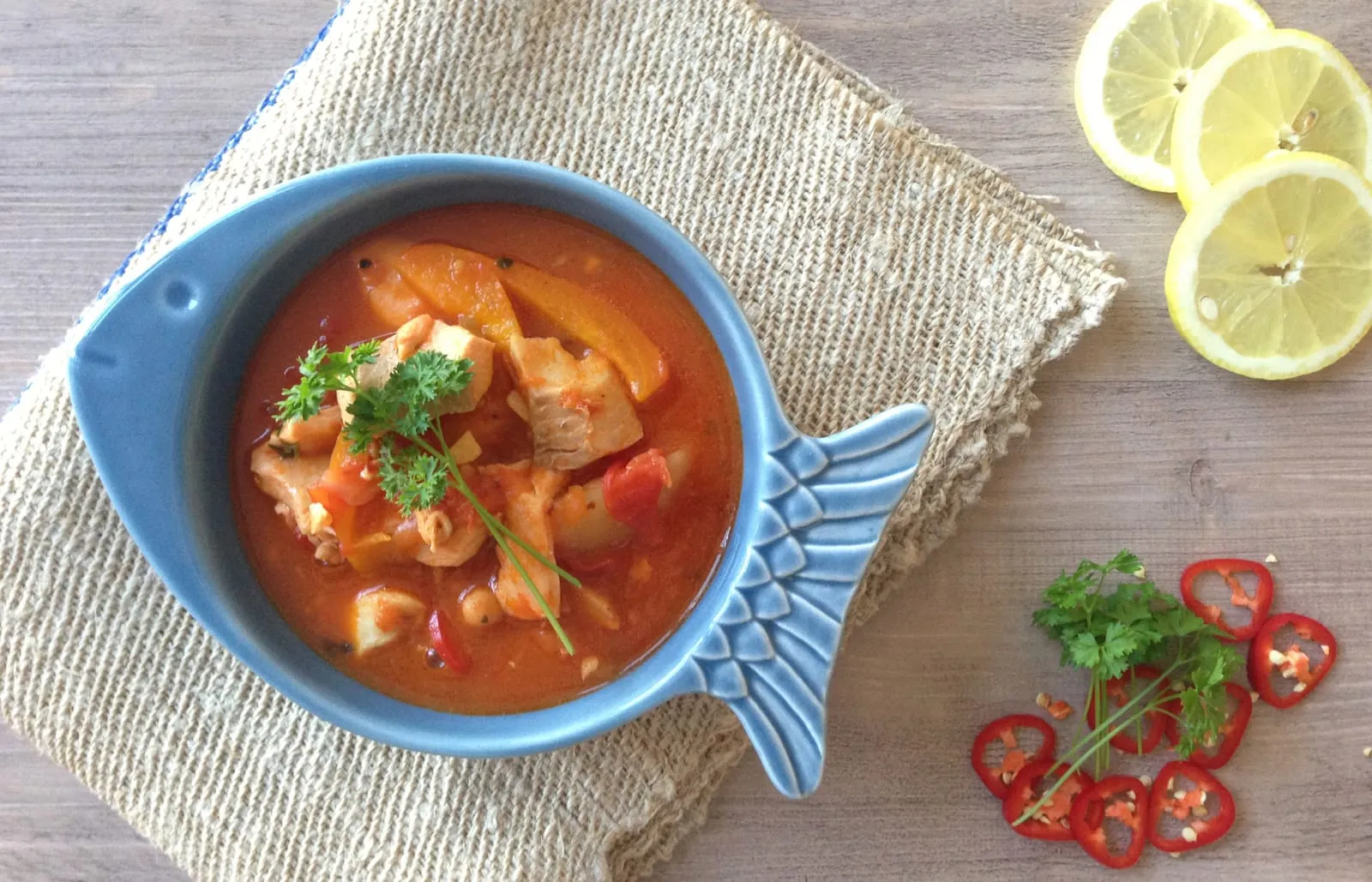
Salmon, haddock and smoked cod simmered with tomatoes, peppers, potatoes and chickpeas. The recipe suggests grilled ciabatta on the side. Wholemeal bread has more than twice the fibre of white, so that is what is counted here. It makes four portions, and the other two are tomorrow’s lunch.
Dinner (side): 2 slices of wholemeal bread (181 calories, 4g fibre, 9g protein)
Snack: Hummus (50g) and carrot sticks (80g) (152 calories, 5g fibre, 5g protein)
Snack: An apple and almonds (20g) (194 calories, 6g fibre, 5g protein)
Day 3 total: 1,621 calories, 40g fibre, 80g protein
High Fibre Meal Plan: Day 4
Breakfast: Avocado Baked Eggs (397 calories, 10g fibre, 17g protein)
Tuesday’s breakfast again, and the same swap to overnight oats if avocado is not for you.
Lunch: Mediterranean Fish Stew, leftovers from Day 3 (306 calories, 6g fibre, 22g protein)
Last night’s stew, warmed through, with another two slices of wholemeal bread. It is inside the FSA’s two days for leftovers.
Lunch (side): 2 slices of wholemeal bread (181 calories, 4g fibre, 9g protein)
Dinner: Pan-Fried Sea Bass with Crushed New Potatoes and Samphire (433 calories, 6g fibre, 27g protein)
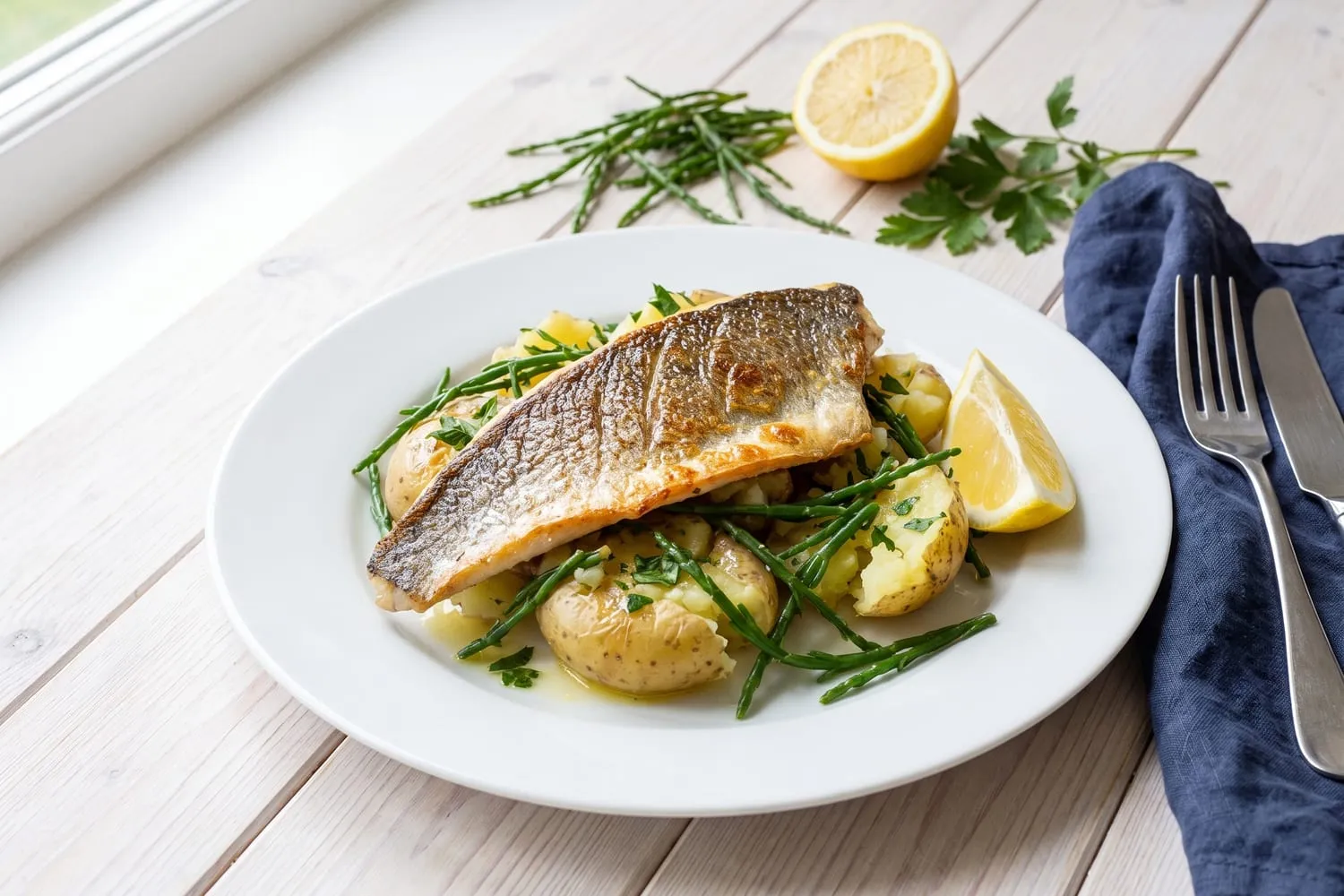
Crisp-skinned sea bass on crushed new potatoes, with samphire folded through. Samphire is only around for a few months of the year, and if you cannot find it the recipe suggests green beans or asparagus instead, seasoned a little more heavily, as samphire brings its own salt.
Snack: Hummus (50g) and carrot sticks (80g) (152 calories, 5g fibre, 5g protein)
Snack: A pear (101 calories, 6g fibre, 1g protein)
Day 4 total: 1,570 calories, 38g fibre, 81g protein
High Fibre Meal Plan: Day 5
Breakfast: Overnight Oats Three Ways (339 calories, 8g fibre, 12g protein)
A fresh pair of jars, made on Thursday evening.
Lunch: Mackerel and Green Bean Salad (434 calories, 10g fibre, 23g protein)

Green beans, sugar snap peas, garden peas and mackerel, with soft boiled eggs broken over the top instead of a dressing. Smoked or tinned mackerel both work. If you are packing it the night before, cool and peel the eggs straight away and break them over the salad in the morning.
Dinner: Anchovy, Tomato and Caper Spaghetti (602 calories, 7g fibre, 21g protein)
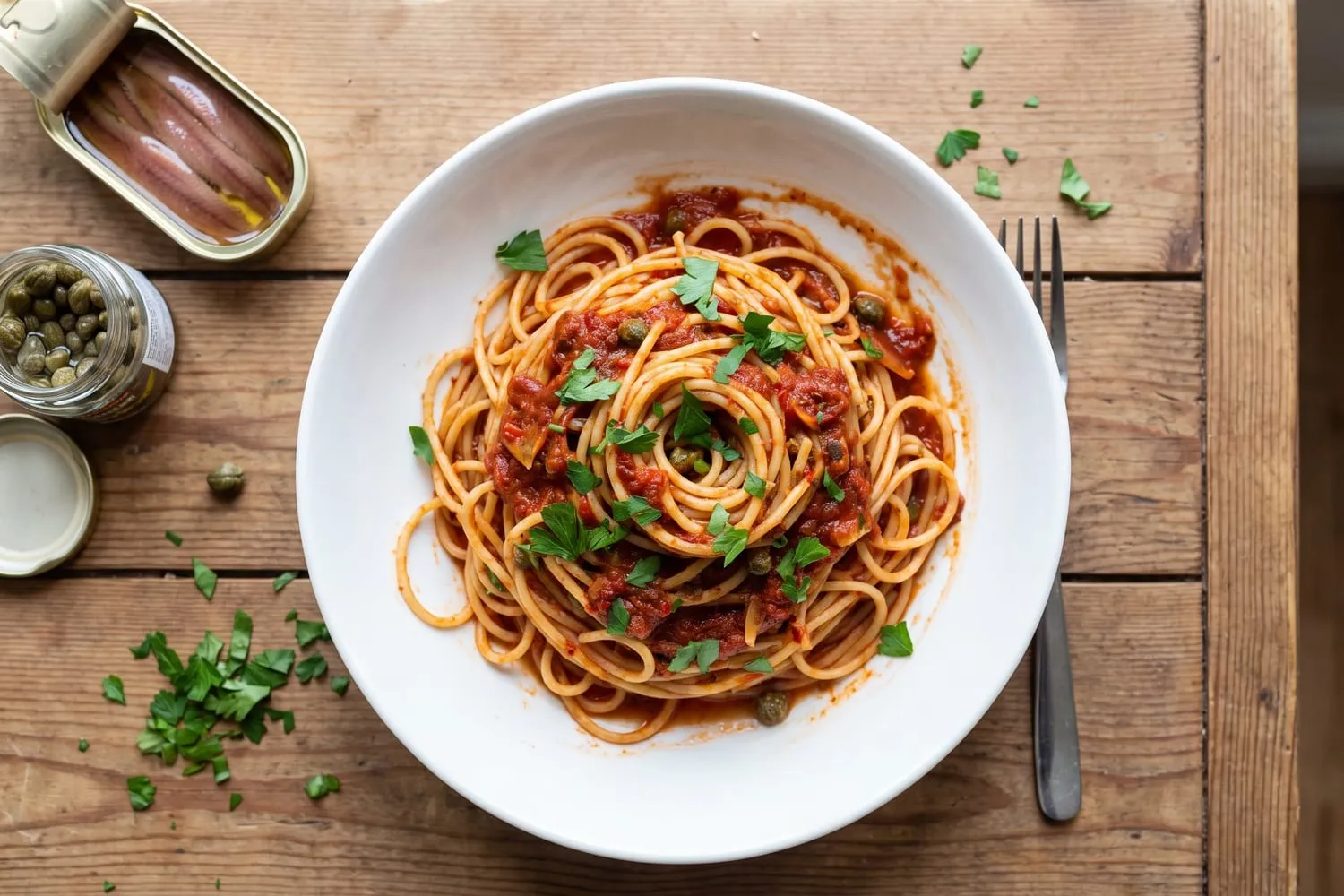
By the end of the week the fridge is looking bare, so dinner comes out of the cupboard. Anchovies melt into the oil and then into a tomato sauce with capers and chilli, and it is on the table in about twenty minutes. It does not taste fishy at all, just deeply savoury.
Snack: A pear (101 calories, 6g fibre, 1g protein)
Snack: Greek yoghurt (150g), raspberries (80g) and almonds (20g) (304 calories, 8g fibre, 19g protein)
Day 5 total: 1,780 calories, 38g fibre, 74g protein
High Fibre Meal Plan: Day 6
Breakfast: Smoked Haddock with Poached Egg and Spinach (457 calories, 2g fibre, 53g protein)
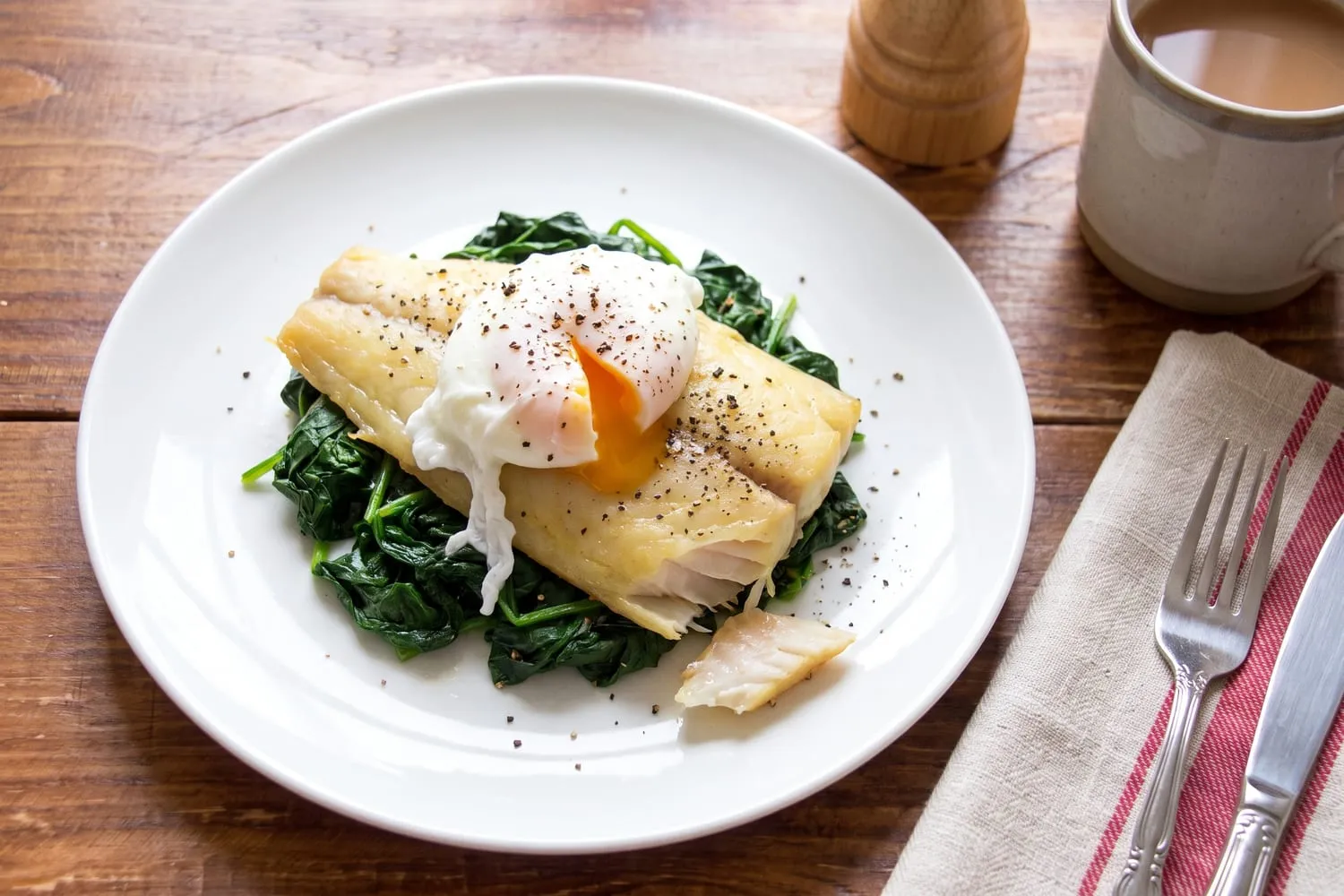
Undyed smoked haddock poached in milk with a bay leaf, a runny poached egg and a pile of wilted spinach. It has barely 2g of fibre but over 50g of protein, and the rest of the day makes up the fibre easily.
Lunch: Spiced Parsnip and Apple Soup (359 calories, 12g fibre, 6g protein)
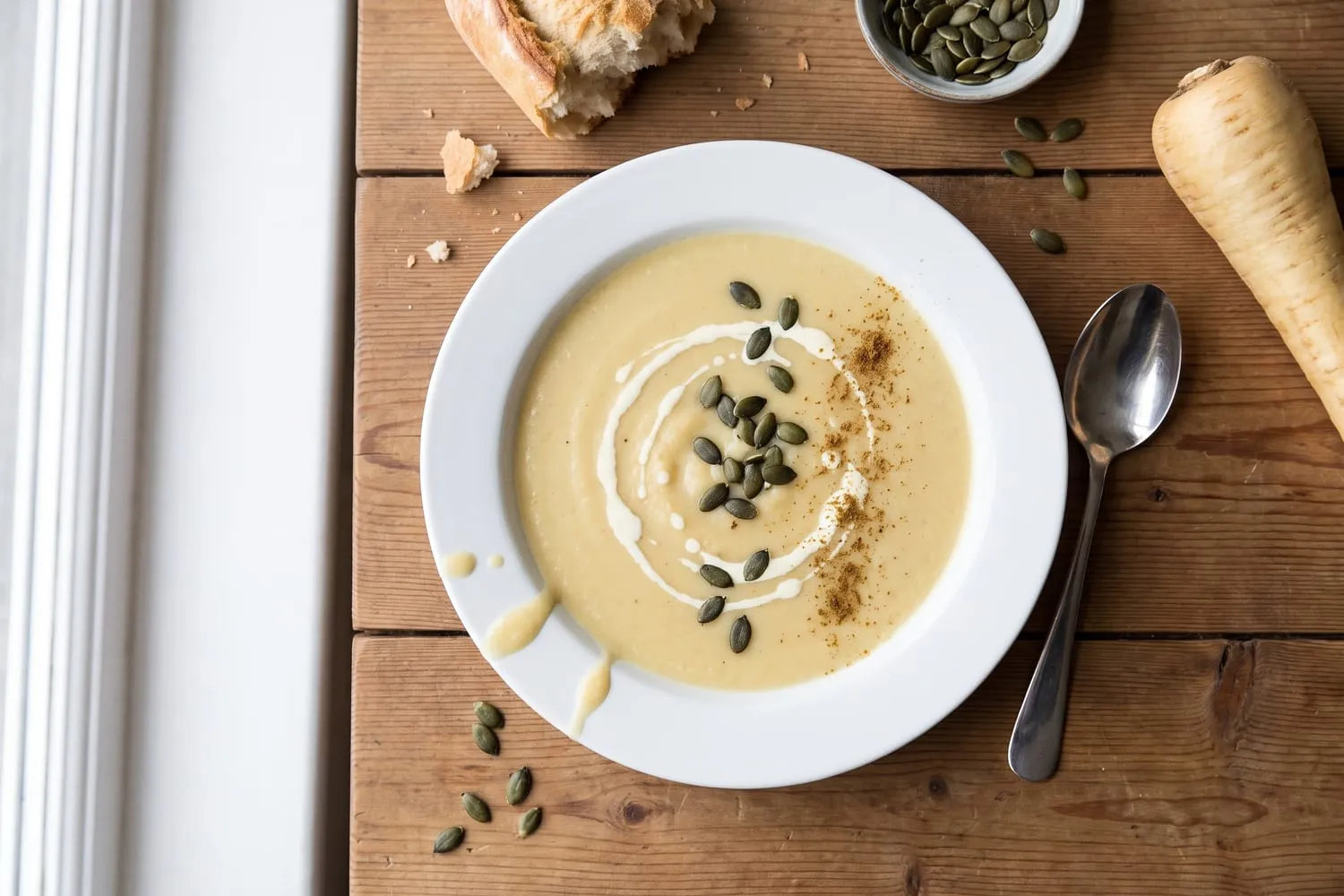
Roasted parsnips and apple blitzed with cumin and coriander. At 12g a bowl it is the highest fibre lunch in the plan before the bread goes anywhere near it. It makes four bowls, so tomorrow’s lunch is done, or freeze the other two for up to three months and leave the cream out until you reheat them.
Lunch (side): 2 slices of wholemeal bread (181 calories, 4g fibre, 9g protein)
Dinner: Mussels with Tomato, Fennel and Saffron (548 calories, 10g fibre, 29g protein)
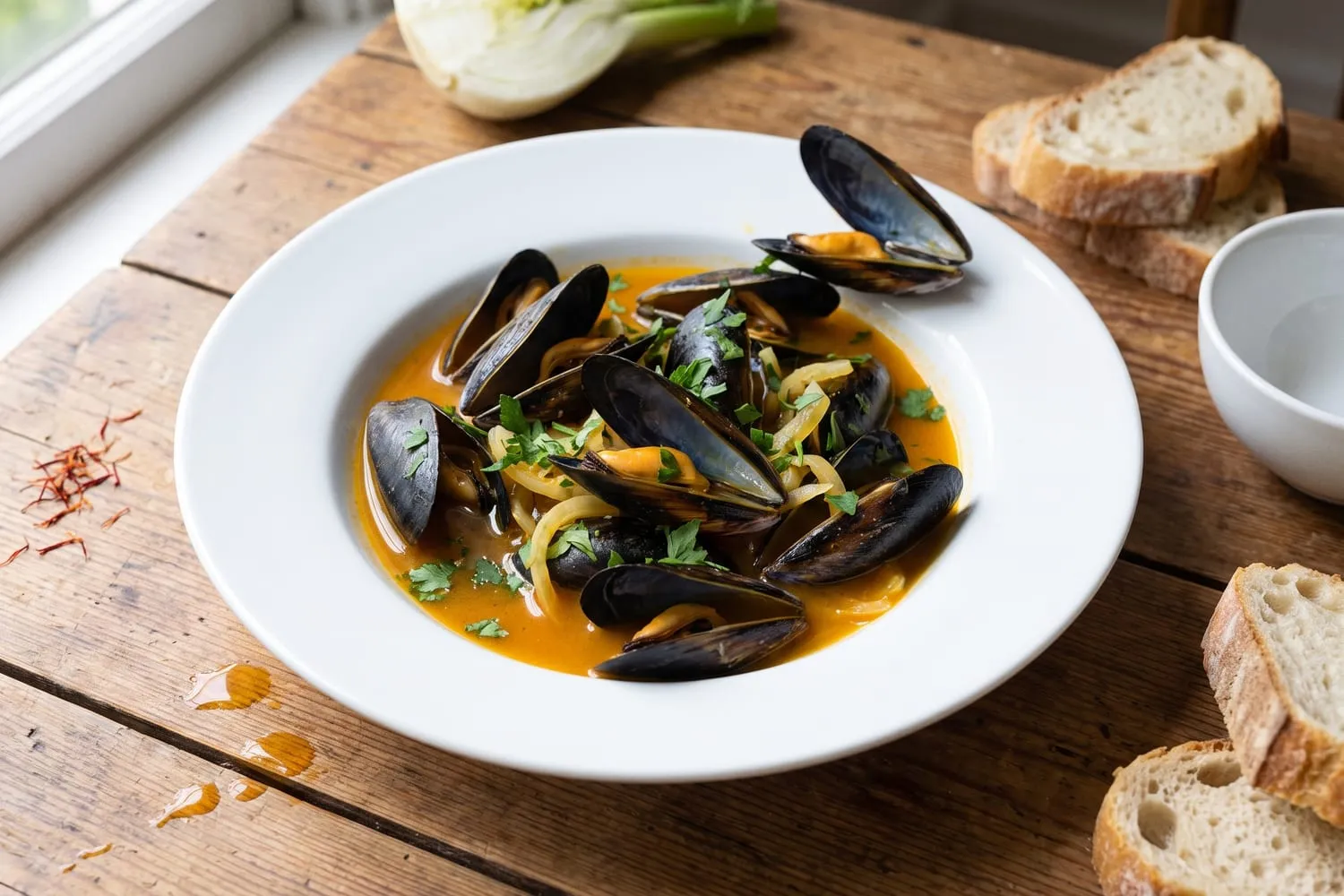
A kilo and a half of mussels steamed open in tomatoes, slow-cooked fennel and saffron. The fibre here is all in the sauce, and the recipe says to serve it with a great deal of bread, so two slices of wholemeal each are counted below.
Dinner (side): 2 slices of wholemeal bread (181 calories, 4g fibre, 9g protein)
Snack: A pear (101 calories, 6g fibre, 1g protein)
Day 6 total: 1,827 calories, 38g fibre, 106g protein
High Fibre Meal Plan: Day 7
Breakfast: Smoked Mackerel Kedgeree (601 calories, 5g fibre, 26g protein)
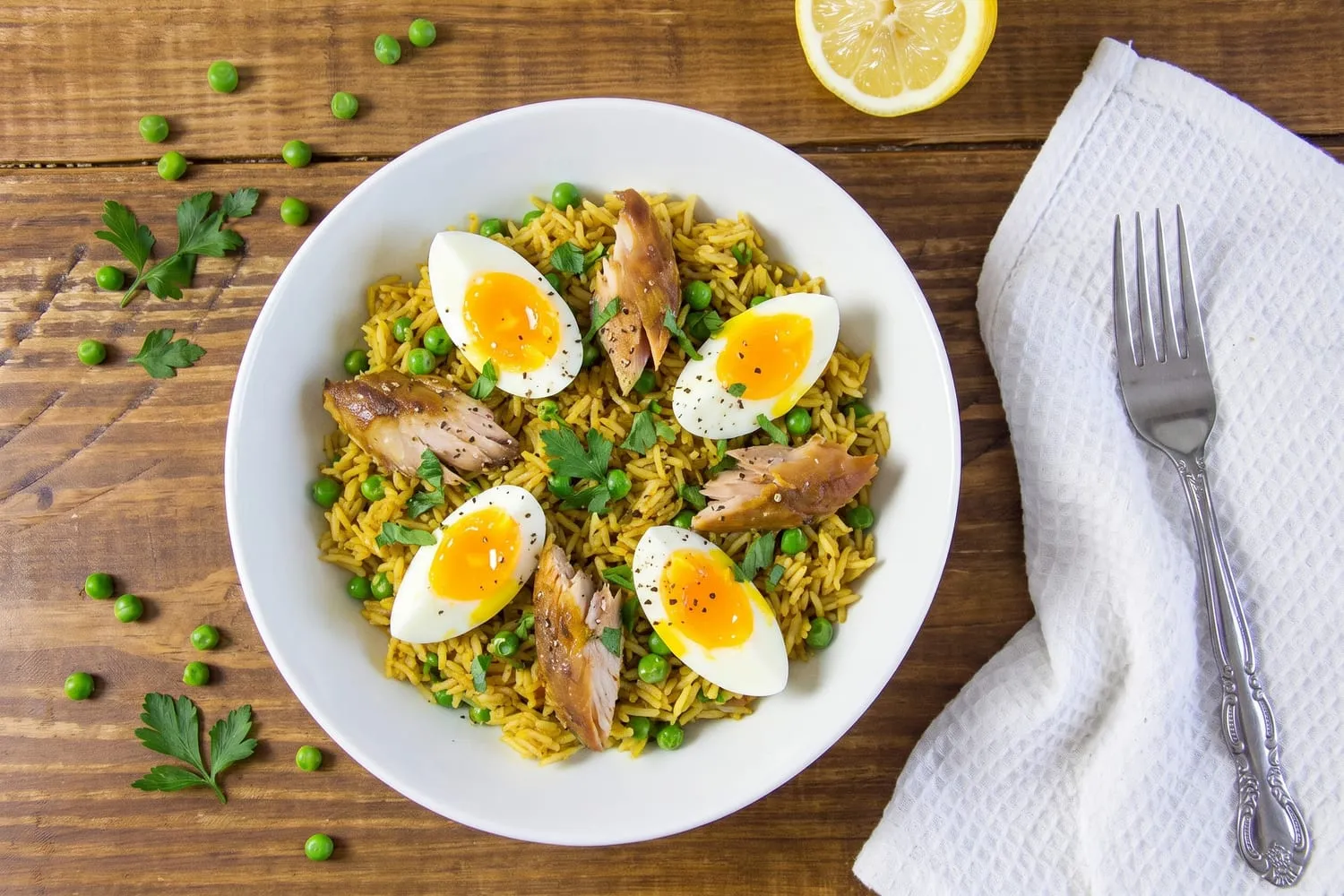
Gently curried rice with flakes of smoked mackerel, peas and soft boiled eggs that are still jammy in the middle. It works as well for a lazy weekend breakfast as it does for dinner. The recipe makes four portions, so halve it for two.
Lunch: Spiced Parsnip and Apple Soup, leftovers from Day 6 (359 calories, 12g fibre, 6g protein)
Yesterday’s soup, which is still within the FSA’s two days.
Dinner: Aloo Gobi with Chickpeas (544 calories, 17g fibre, 14g protein)

Cauliflower, potato and chickpeas cooked with turmeric, coriander and green chilli. It needs very few ingredients, which makes it the right dinner for the day before the shop, and at 17g a portion it is the highest fibre recipe in the plan.
Snack: Greek yoghurt (150g), raspberries (80g) and almonds (20g) (304 calories, 8g fibre, 19g protein)
Day 7 total: 1,808 calories, 42g fibre, 63g protein
High Fibre Meal Plan Shopping List
This covers the full week for two people, as written. It assumes you already have the storecupboard basics: oils, salt and pepper, dried spices, stock, soy sauce, honey, vinegar, cornflour and tomato purée. If you swap breakfasts, move the avocados and eggs over to oats or the other way round.
The fish for later in the week, and the mussels especially, are best bought nearer the day. If you would rather do it all in one shop, the fillets can go straight into the freezer when you get home. The FSA says you can freeze food right up to its use-by date, then defrost it in the fridge overnight.
| Item | Quantity |
|---|---|
| Pollock fillets, skin on | 4 (about 600g) |
| Skinless salmon fillets | 2 |
| Salmon, haddock and smoked cod for the stew | 100g of each |
| Squid (calamari), cleaned, with tentacles | 225g |
| Sea bass fillets, skin on | 2 |
| Undyed smoked haddock fillets | 2 (about 300g) |
| Live mussels | 1.5kg |
| Smoked mackerel fillets | 1 x 200g pack (you need 175g) |
| Anchovy fillets in olive oil | 1 small tin (you need 8) |
| Eggs | 16 (2 of them very fresh, for poaching) |
| Plain Greek yoghurt | 2 x 500g tubs (you need 900g) |
| Whole milk | 2 pints (1.136 litres) |
| Butter | 1 small block |
| Single cream | 1 small pot |
| Feta | 1 small block (you need 30g) |
| Hummus | 1 x 200g tub |
| Wholemeal bread | 1 x 800g loaf (you need 20 slices) |
| Rolled oats | 300g |
| Spaghetti | 200g |
| Basmati rice | 125g |
| Chickpeas | 4 x 400g tins |
| Cannellini beans | 2 x 400g tins |
| Chopped tomatoes | 3 x 400g tins |
| Capers | 1 small jar |
| Teriyaki sauce | 1 bottle |
| Rice vinegar | 1 small bottle |
| Soft brown sugar | 50g |
| Fish stock | 1 stock pot or cube (250ml) |
| Dry white wine | 300ml |
| Saffron threads | 1 small pack |
| Almonds | 1 x 200g bag (you need 160g) |
| Cashews | 1 small bag |
| Sesame and pumpkin seeds | 1 small bag of each |
| Cocoa powder and desiccated coconut | a couple of teaspoons of each |
| Avocados | 5 |
| Pears | 8 |
| Eating apples | 4 |
| Raspberries | 480g |
| Blueberries | 1 small punnet (you need 120g) |
| Bananas | 2 small |
| Lemons | 6 (1 of them unwaxed) |
| Lime | 1 |
| Cherry or grape tomatoes | 650g |
| Vine tomatoes | 300g |
| Onions | 3 |
| Shallots | 2 |
| Spring onions | 2 bunches |
| Garlic | 2 bulbs |
| Fresh ginger | 1 small piece |
| Fresh chillies | 2 green, 1 red |
| Peppers | 3 (red, green and yellow) |
| Carrots | 1kg bag |
| Broccoli | 1 head |
| Cauliflower | 1 |
| Fennel | 1 bulb |
| Celery | 1 head |
| Green beans | 150g |
| Sugar snap peas | 1 small pack |
| Frozen peas | 1 small bag |
| Mushrooms | 50g (a handful) |
| Spinach | 200g |
| Mixed salad leaves | 1 bag |
| Samphire (or more green beans) | 100g |
| New potatoes | 400g |
| Floury potatoes, such as Maris Piper | 550g (about 3) |
| Parsnips | 700g |
| Fresh coriander | 2 large bunches |
| Fresh flat-leaf parsley | 3 bunches |
Frequently asked questions
How can I get 30g of fibre a day?
Spread it across the day rather than trying to get it all from one meal. In this plan most breakfasts bring 8 to 10g, lunches and dinners somewhere between 6 and 17g, and the snacks make up the difference. The easiest wins are pulses, vegetables with every meal, oats, wholemeal bread instead of white, and fruit or unsalted nuts between meals. We have gone into more detail in our FAQ on how to get enough fiber without meat.
Which fish is high in fibre?
None of them, honestly. The British Nutrition Foundation describes fibre as carbohydrate found naturally in plants, so fish and seafood have none at all. That is exactly why what you eat with your fish matters. The teriyaki salmon in this plan has next to no fibre on its own and about 12g once the stir fry goes next to it, and the pollock gets its 8g from the beans and tomatoes it roasts on.
Is a high fibre diet good for weight loss?
It can help. The NHS says fibre can help you feel full, which means you are less likely to eat too much. It does not cancel out calories, though. This plan was not written for weight loss, although at 1,570 to 1,830 calories a day it does sit below the NHS’s rough guide of 2,000 for women and 2,500 for men. If losing weight is the aim, the NHS suggests cutting around 600 calories a day, and we have written more about the pescatarian diet and losing weight.
What is a high protein high fibre meal plan?
It is a plan where every meal is built around both: fish, eggs and yoghurt for protein, and pulses, vegetables, oats and wholegrains for fibre. Beans, lentils and chickpeas are the useful overlap, because they bring both. The NHS suggests including some protein in each meal, like beans, pulses, fish or eggs, as it can help you feel full for longer. This plan puts fibre first but still manages 63 to 106g of protein a day, and the pollock with white beans shows it best, with 40g of protein and 8g of fibre on one plate. If protein matters more to you than fibre, our high protein meal plan is the one to look at.
If you want more ideas once the week is done, the original 7-day pescatarian meal plan shares a handful of these recipes, including the aloo gobi and the teriyaki stir fry, and our vegetarian meal plan is there for the weeks when you fancy a break from fish.