
7-Day Pescatarian Mediterranean Meal Plan
The Mediterranean diet already leans heavily on fish, beans and vegetables, so making it pescatarian is a much smaller step than it sounds. This is a full week of it for two people: fish or seafood on five days, beans or chickpeas every day, two vegetarian days, and olive oil doing nearly all of the cooking. If you’ve seen it called a pesco-Mediterranean diet, it’s the same idea. Every meal is a recipe from the blog or a simple plate of something, and the calories, protein and fibre all come from the recipe cards.
I do our big food shop on a Monday, so day one is a Monday. The pollock and the mussels come first, while they’re at their freshest, and the fish for later in the week can go straight into the freezer (more on that below). By Friday the fridge is looking bare, which is exactly what the anchovy spaghetti is for.
Breakfast was the hard part. Matt won’t eat bread or anything sweet first thing, and he loves eggs more than just about anything, so five of the seven breakfasts are eggs in one form or another. The Greek yoghurt on day two and the overnight oats on day four are mine. On those two mornings he has three egg muffins instead, which come in at about the same calories.
How this Mediterranean diet meal plan works
The British Heart Foundation describes the Mediterranean diet as a style of eating rather than a strict regime. It’s built on vegetables, fruit, beans, nuts and wholegrains, with moderate amounts of fish and dairy, and olive oil used in place of butter. That’s the pattern this week follows. There’s fish or seafood on five days, from sardines and anchovies to pollock, mussels and squid. Beans or chickpeas turn up every day, whether that’s cannellini roasted under the pollock or butter beans in a dip. The bread is wholemeal, and the other grains are bulgur wheat and oats.
It isn’t perfect, and I’d rather say so. The anchovy spaghetti uses white pasta and the stuffed tomatoes use couscous. The BHF lists wholegrain pasta among the foods to include, so wholewheat spaghetti is an easy swap if you want it, although the figures below are for the recipes as written. The mushrooms are roasted in butter as well as olive oil, and there’s cheese on a few days, mostly feta.
The best-known evidence for eating this way is the PREDIMED trial, which followed 7,447 people in Spain aged 55 to 80 who were at high risk of cardiovascular disease. Those assigned to a Mediterranean diet with extra olive oil or nuts were less likely to have a heart attack or stroke, or to die of cardiovascular causes, over about five years than those who were simply advised to cut down on fat. That’s a whole way of eating, over years, in people already at risk, so it doesn’t promise anything from one week of dinners. The BHF’s own conclusion is that it’s the diet as a whole, rather than any one food, that brings the benefits.
The week has just under three portions of oily fish a person, from the sardines on days four and seven, the anchovies and a little salmon in the fish stew. That’s within NHS guidance for most adults. The NHS advises no more than two portions a week for girls, and for women who are pregnant, breastfeeding or may have a child one day, so if that’s you, swap the sardines on day four for the mussels from day two, which brings the week down to about one. Tinned tuna doesn’t count as oily fish, so the pâté doesn’t change that.
The days come in at roughly 1,550 to 1,750 calories a person, a little under the NHS’s rough guide of 2,000 a day for women and 2,500 for men. This isn’t a weight loss plan, so if you’re feeding a big appetite (Matt goes back for seconds), add more bread, bulgur, fruit or a handful of nuts. Fibre runs from about 22 to 37g a day and averages just under 30g, close to the NHS’s 30g and well above the 20g or so most adults actually eat.
Because the shop is on a Monday, put the fish for the second half of the week in the freezer when you get home. The FSA says you can freeze food right up to its use-by date, then defrost it in the fridge overnight and use it within 24 hours. So the sardines and squid come out on Wednesday night, and the fish for Sunday comes out on Saturday night. Leftovers go into tubs for the next day’s lunch, which is well within the FSA’s advice to eat them within 48 hours.
The week at a glance
Everything below is per person, and the shopping list at the end covers two people for the whole week. The snacks are optional, as the BHF points out that grazing between meals isn’t really the Mediterranean way, but the daily totals include them.
| Day | Breakfast | Lunch | Dinner | Snack | Calories | Protein | Fibre |
|---|---|---|---|---|---|---|---|
| Day 1 | 3x Spanish Style Egg Muffins | Greek Chickpea Salad | Roast Pollock with White Beans and Tomatoes + 2 slices of wholemeal bread | Roasted Red Pepper and Walnut Dip + Carrot sticks (80g) | 1,568 | 91g | 29g |
| Day 2 | Greek yoghurt with walnuts, blueberries and honey | Roast Pollock with White Beans and Tomatoes | Mussels with Tomato, Fennel and Saffron + 2 slices of wholemeal bread | An orange and 20g almonds | 1,661 | 102g | 31g |
| Day 3 | 3x Spanish Style Egg Muffins | Greek Chickpea Salad + a wholemeal pitta | Italian Stuffed Aubergine + Bulgur wheat (150g cooked) | Roasted Red Pepper and Walnut Dip + Carrot sticks (80g) | 1,735 | 73g | 37g |
| Day 4 | Overnight Oats Three Ways | 2x Tuna and White Bean Pâté + a wholemeal pitta | Grilled Sardines with Chermoula + Bulgur wheat (150g cooked) | Roast Garlic and Butter Bean Dip + Carrot sticks (80g) | 1,661 | 74g | 30g |
| Day 5 | 3x Spanish Style Egg Muffins | Calamari and Chickpea Salad | Anchovy, Tomato and Caper Spaghetti | Tuna and White Bean Pâté + Carrot sticks (80g) | 1,597 | 83g | 24g |
| Day 6 | Boiled eggs with feta, olives, tomato and cucumber | 2x Moroccan Stuffed Sweet Potato Skins | Cous Cous and Roasted Vegetable Stuffed Tomatoes + Garlic and Thyme Roasted Mushrooms | Roast Garlic and Butter Bean Dip + Carrot sticks (80g) | 1,557 | 62g | 33g |
| Day 7 | Garlic and Thyme Roasted Mushrooms + 2 eggs, fried in a teaspoon of olive oil | Pan-Fried Sardine Fillets on Toast + 2 slices of wholemeal toast | Mediterranean Fish Stew + 2 slices of wholemeal bread | Roast Garlic and Butter Bean Dip + Carrot sticks (80g) | 1,568 | 83g | 22g |
Mediterranean Meal Plan: Day 1
Breakfast: 3x Spanish Style Egg Muffins (354 calories, 24g protein, 2g fibre)
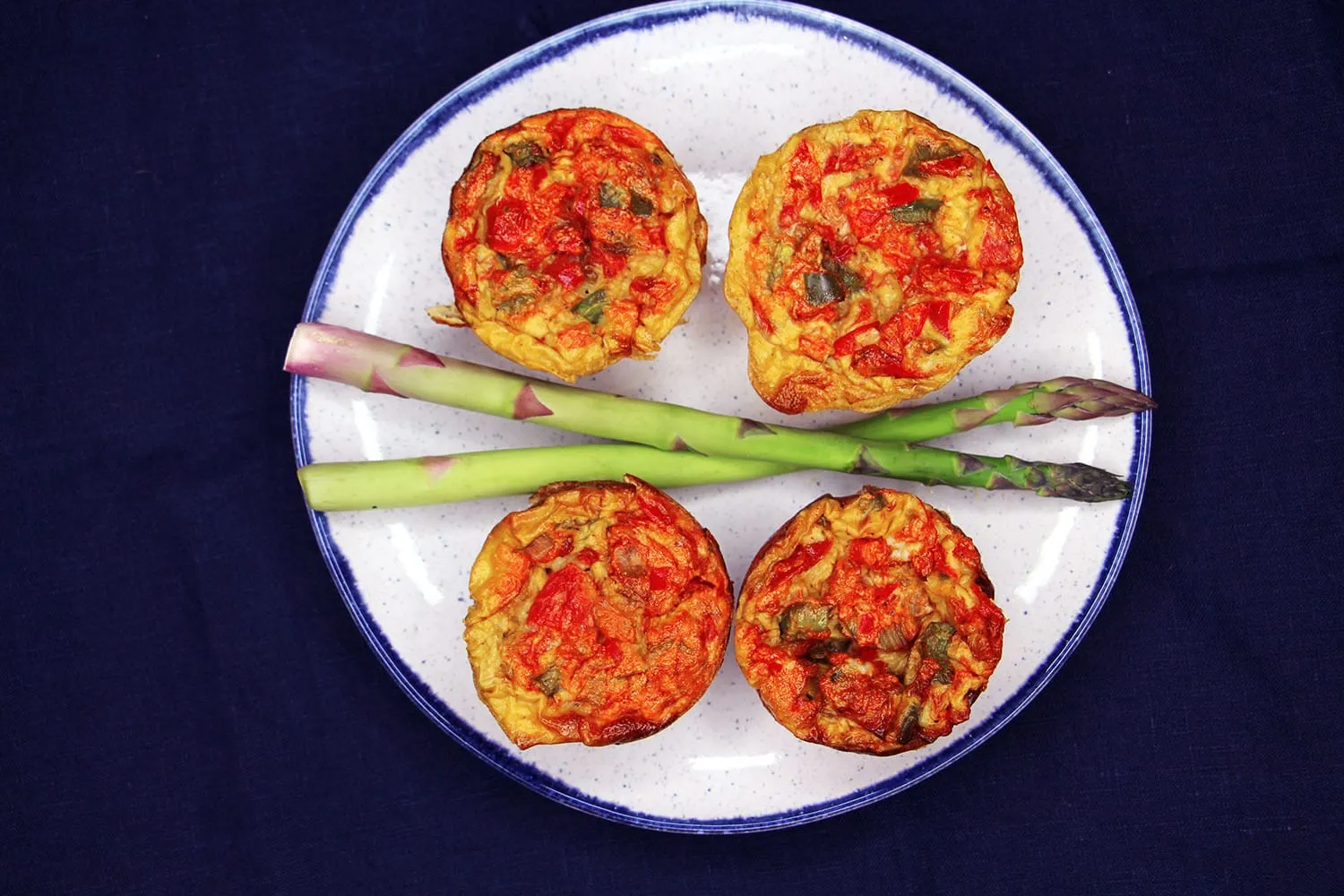
Peppers, tomatoes and a little paprika baked into eggs in a muffin tin. Make a double batch today, because they keep in the fridge for three to four days and day three’s breakfast comes from the same batch.
Lunch: Greek Chickpea Salad (312 calories, 13g protein, 10g fibre)
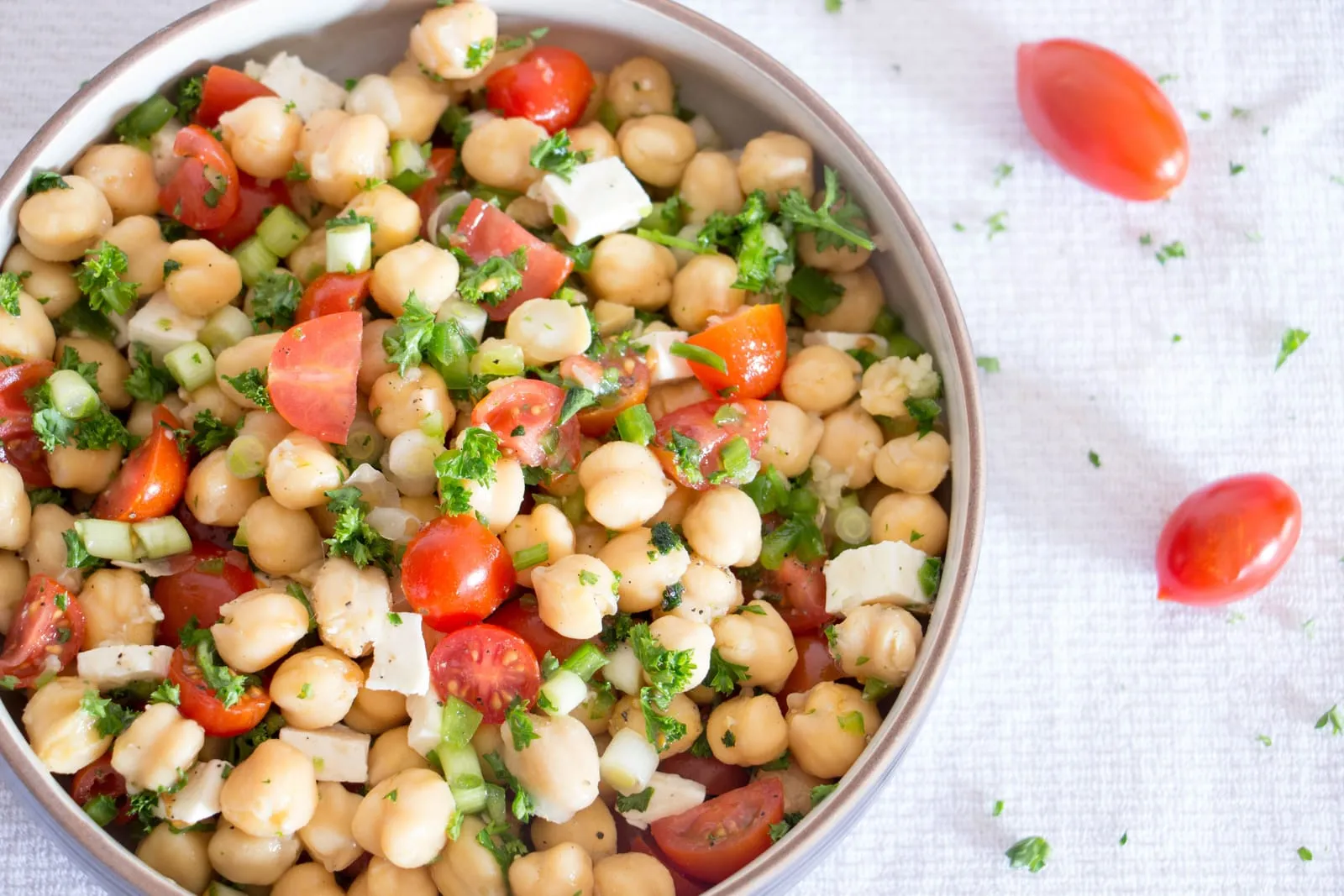
Chickpeas, feta, tomatoes and spring onions with a generous amount of garlic, dressed with lemon and olive oil. It takes ten minutes and keeps well in a tub, so I make it the night before and take it to work.
Dinner: Roast Pollock with White Beans and Tomatoes (446 calories, 40g protein, 8g fibre)
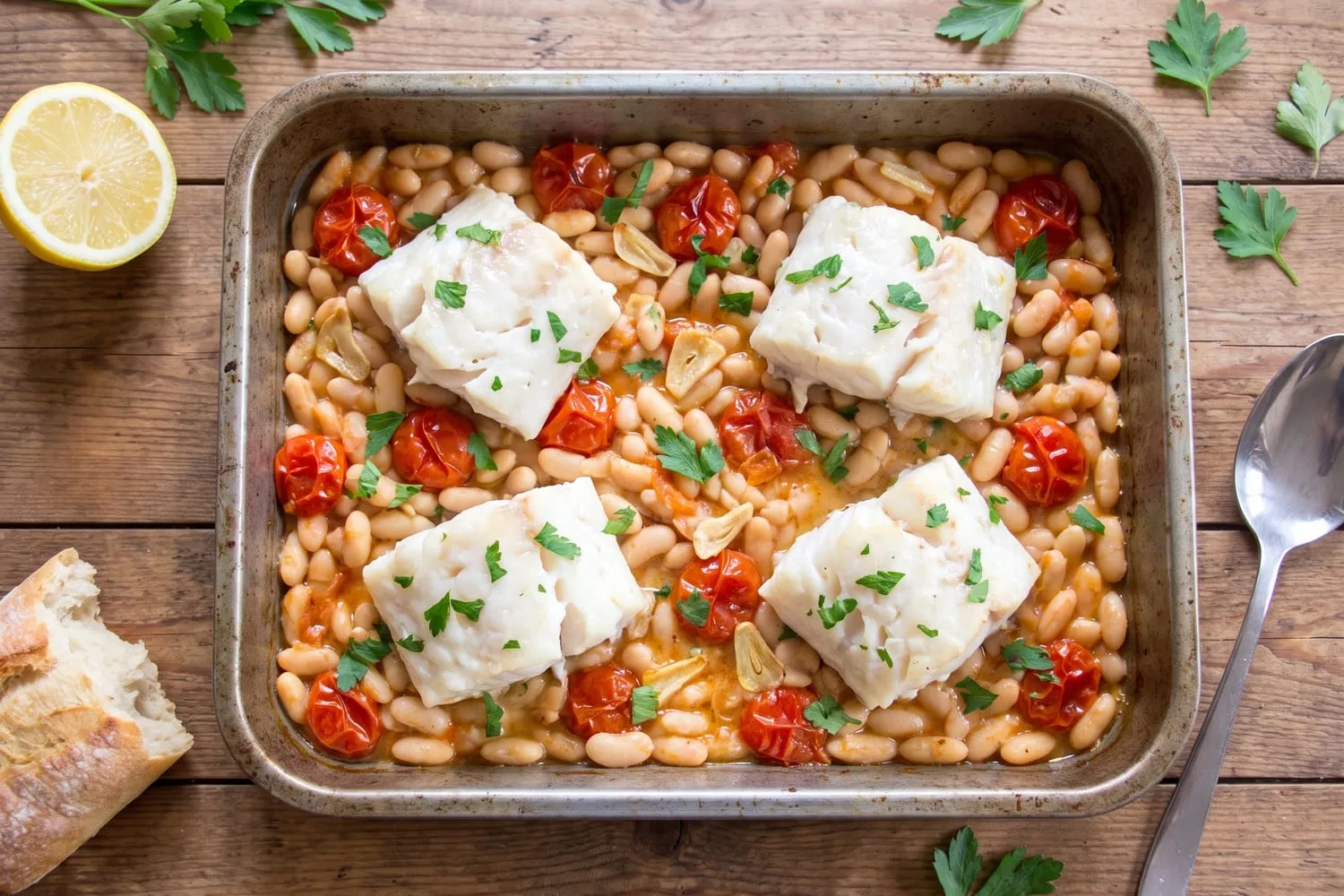
Pollock, cannellini beans and cherry tomatoes roasted in one tin with garlic and oregano. The recipe feeds four with bread to mop out the tin, so there’s bread alongside, and the other two portions go into tubs for tomorrow’s lunch.
Dinner (side): 2 slices of wholemeal bread (181 calories, 9g protein, 4g fibre)
Snack: Roasted Red Pepper and Walnut Dip (242 calories, 5g protein, 3g fibre)
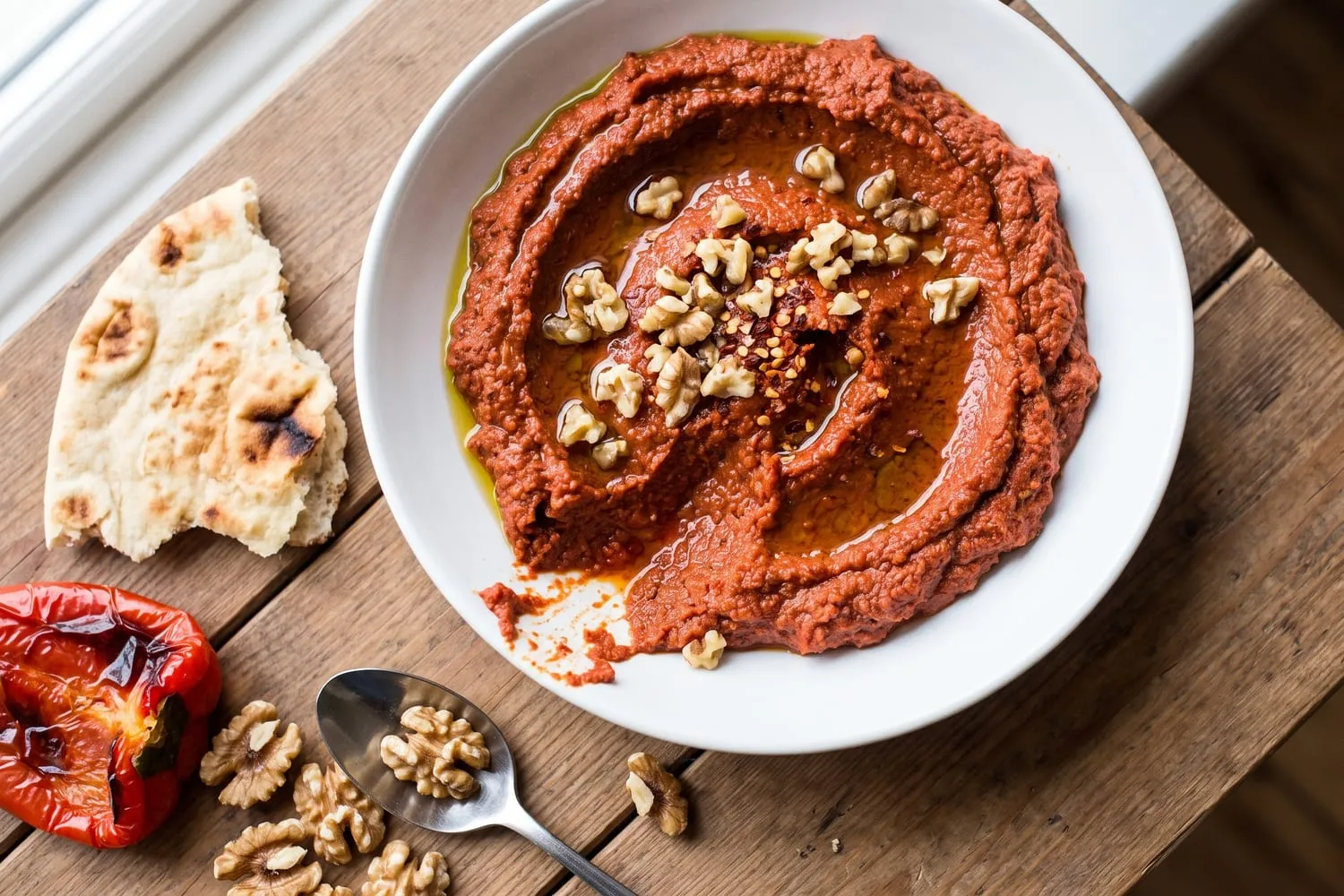
Roasted red peppers blitzed with toasted walnuts, garlic, cumin and a pinch of chilli. It keeps for five days in the fridge and freezes well, so the batch covers day three as well and the last two portions can go in the freezer.
Snack: Carrot sticks (80g) (33 calories, 1g protein, 2g fibre)
Day 1 total: 1,568 calories, 91g protein, 29g fibre
Mediterranean Meal Plan: Day 2
Breakfast: Greek yoghurt with walnuts, blueberries and honey (308 calories, 19g protein, 3g fibre)
Low-fat Greek yoghurt with walnuts, blueberries and a teaspoon of honey, which is more or less the BHF’s own example of a Mediterranean breakfast. This one is mine, since Matt won’t eat anything sweet in the morning.
Lunch: Roast Pollock with White Beans and Tomatoes, leftovers from Day 1 (446 calories, 40g protein, 8g fibre)
Last night’s tin. The fish doesn’t reheat well, so eat it cold or only just warmed through. The beans are arguably better on the second day anyway.
Dinner: Mussels with Tomato, Fennel and Saffron (548 calories, 29g protein, 10g fibre)
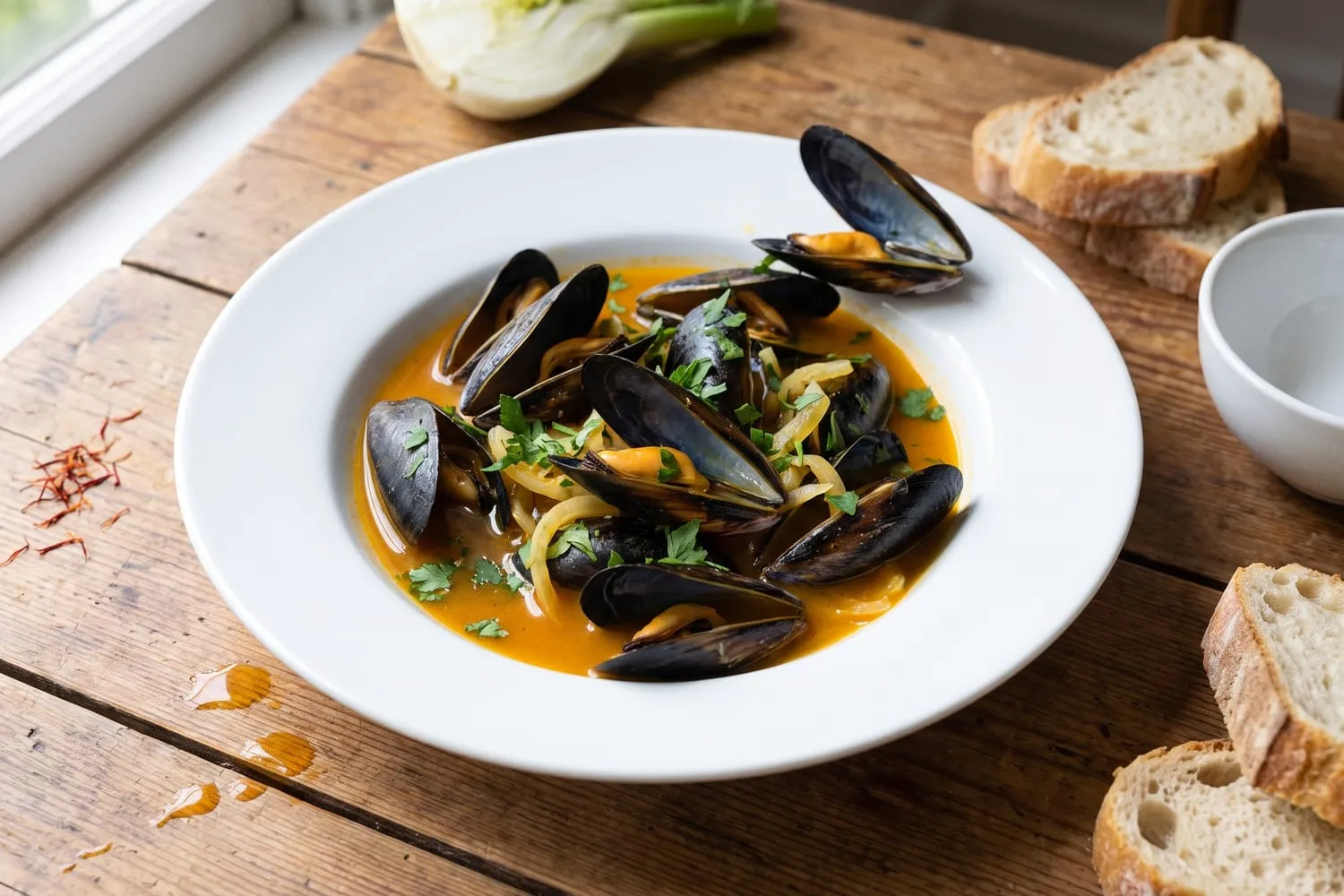
Mussels steamed open in white wine and tomatoes with slow-cooked fennel and saffron. Throw away any that are cracked or won’t close before cooking, and any that stay shut afterwards. The card leaves out the bread, so two slices each are counted separately.
Dinner (side): 2 slices of wholemeal bread (181 calories, 9g protein, 4g fibre)
Snack: An orange and 20g almonds (178 calories, 5g protein, 6g fibre)
Day 2 total: 1,661 calories, 102g protein, 31g fibre
Mediterranean Meal Plan: Day 3
Breakfast: 3x Spanish Style Egg Muffins, leftovers from Day 1 (354 calories, 24g protein, 2g fibre)
The rest of Monday’s batch, warmed through in the microwave for a minute.
Lunch: Greek Chickpea Salad (312 calories, 13g protein, 10g fibre)
A fresh batch of Monday’s salad, with a wholemeal pitta this time to make more of a meal of it.
Lunch (side): A wholemeal pitta (157 calories, 6g protein, 4g fibre)
Dinner: Italian Stuffed Aubergine (512 calories, 20g protein, 10g fibre)
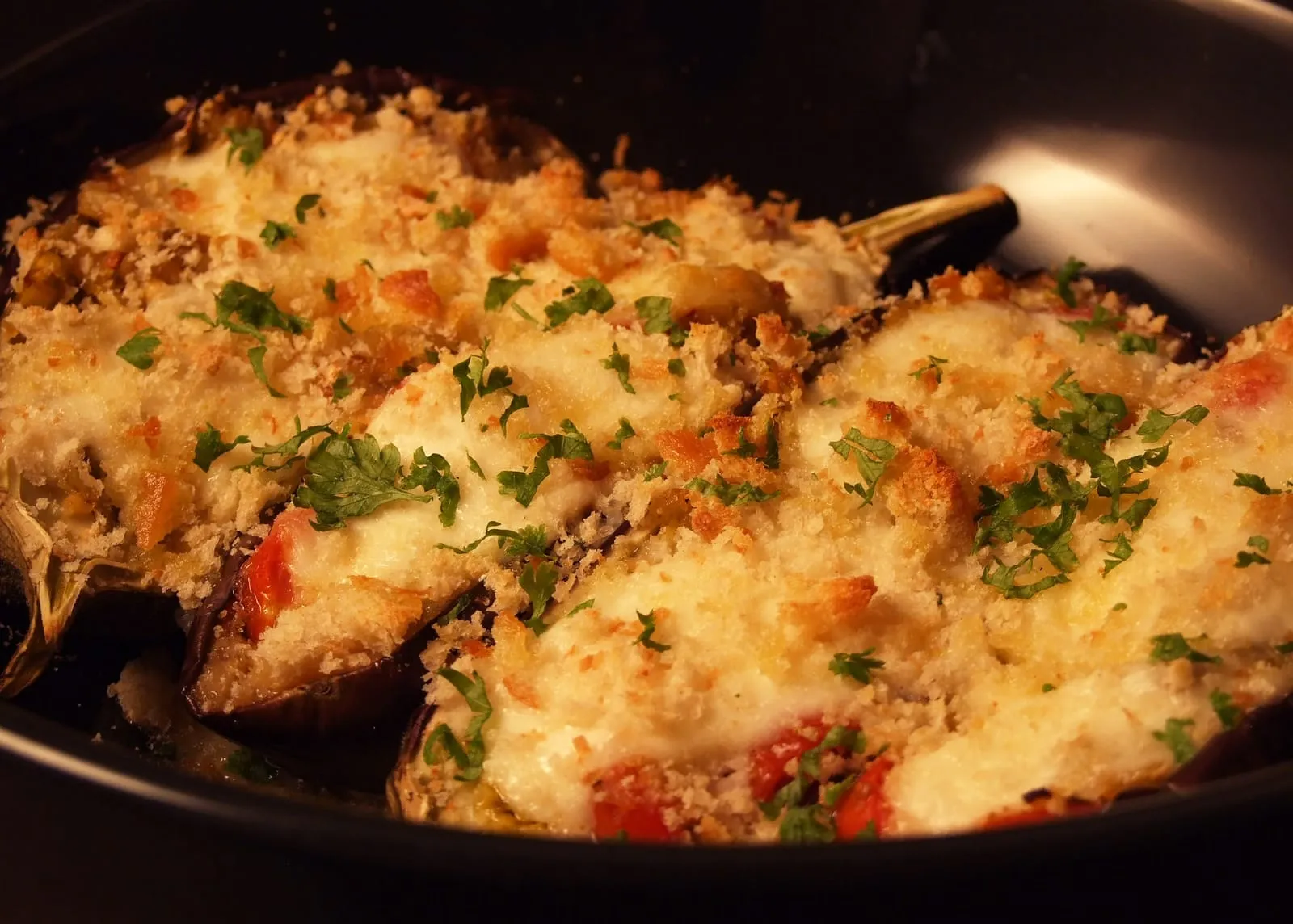
Aubergine halves roasted, then filled with their own flesh fried with onion, garlic, cherry tomatoes, oregano and lemon, and finished with breadcrumbs and mozzarella. The recipe suggests rice, quinoa or couscous if you want it more substantial, and bulgur wheat does the same job.
Dinner (side): Bulgur wheat (150g cooked) (125 calories, 5g protein, 7g fibre)
Snack: Roasted Red Pepper and Walnut Dip, leftovers from Day 1 (242 calories, 5g protein, 3g fibre)
The second round of Monday’s dip.
Snack: Carrot sticks (80g) (33 calories, 1g protein, 2g fibre)
Day 3 total: 1,735 calories, 73g protein, 37g fibre
Mediterranean Meal Plan: Day 4
Breakfast: Overnight Oats Three Ways (339 calories, 12g protein, 8g fibre)
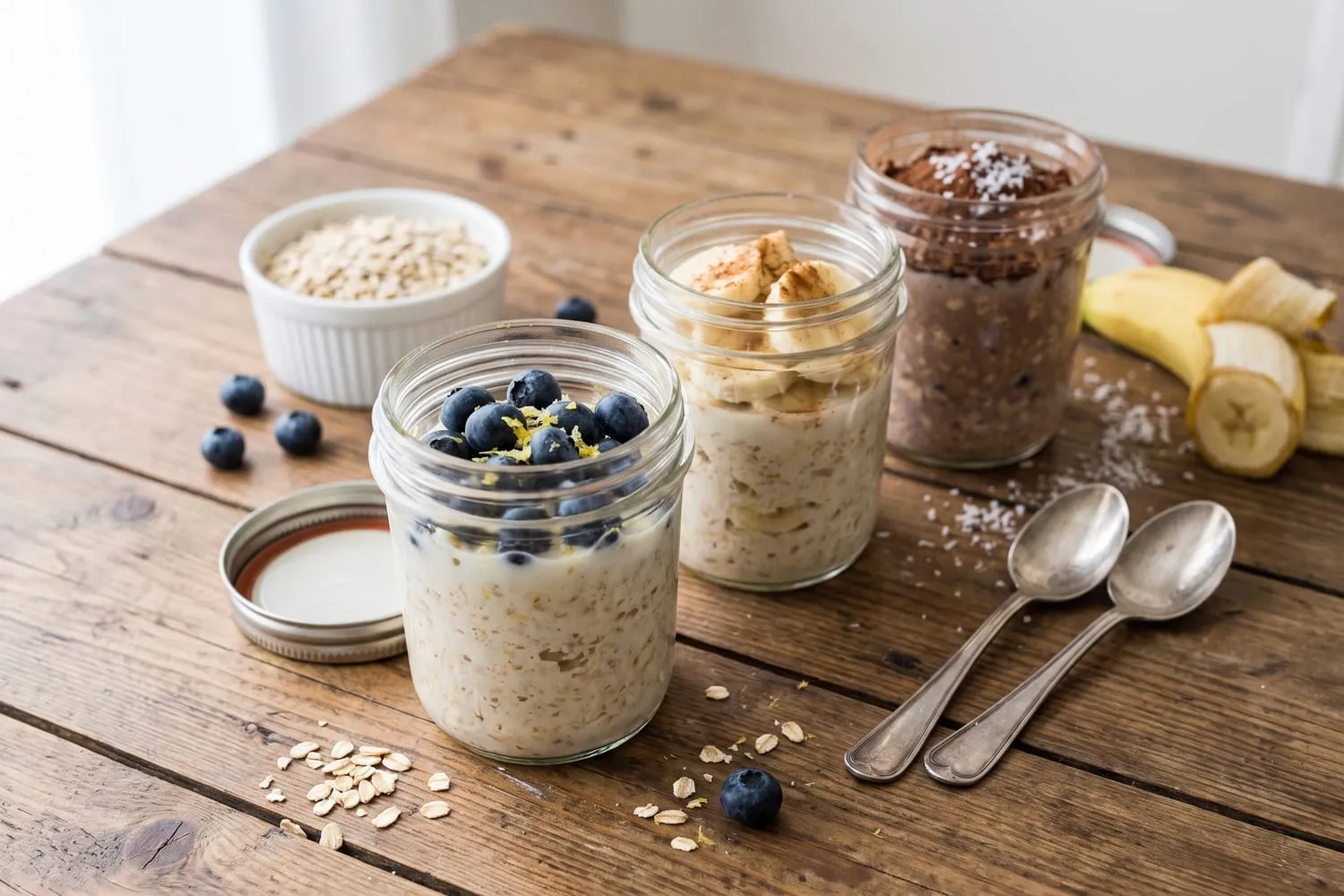
Oats, milk and honey left in the fridge overnight, in three flavours: blueberry and lemon, banana and cinnamon, and cocoa and coconut. The recipe makes three jars and they keep for three days, so the third is a spare breakfast for later in the week.
Lunch: 2x Tuna and White Bean Pâté (318 calories, 19g protein, 5g fibre)
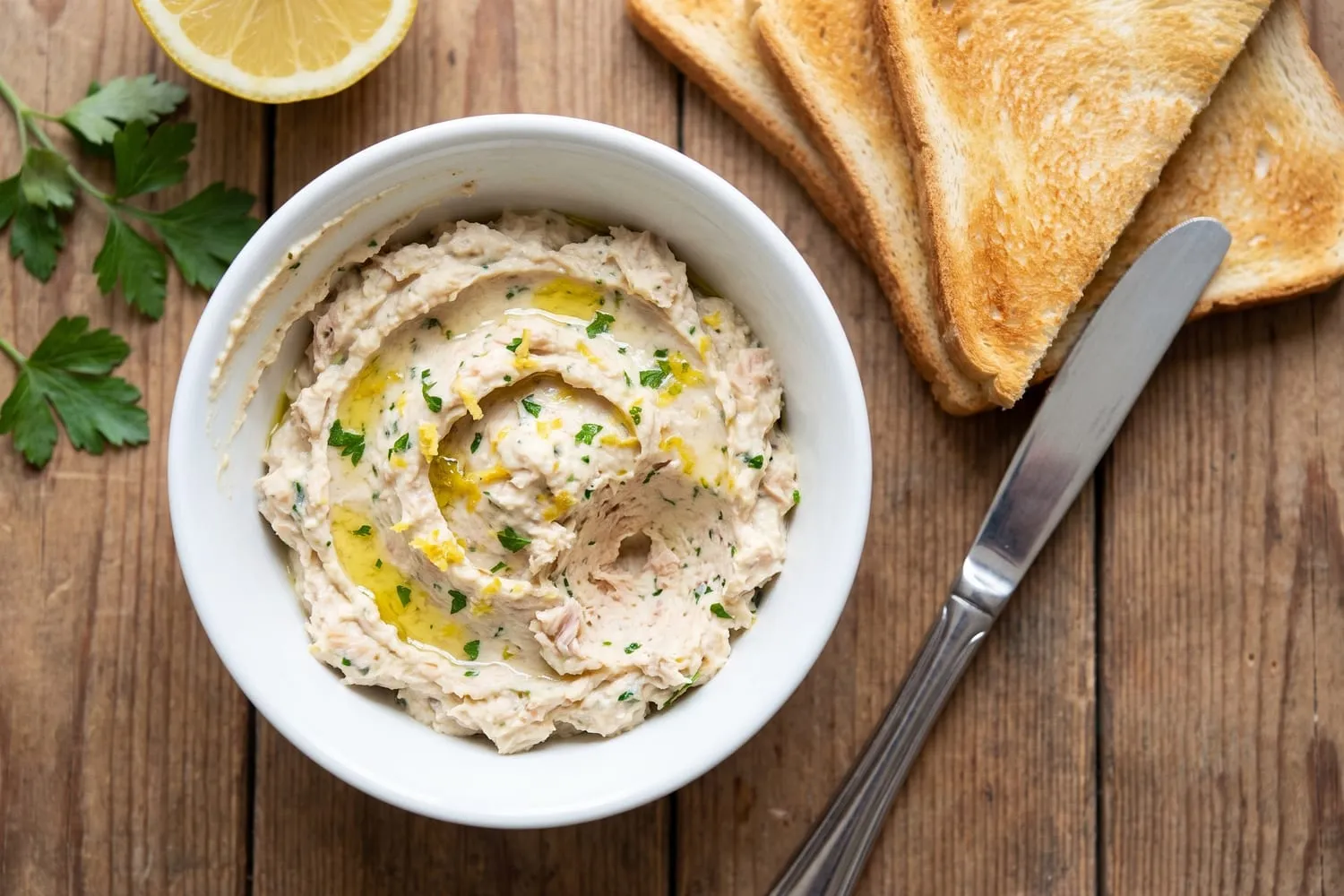
Tuna and cannellini beans blitzed with lemon, olive oil and a little crème fraîche. I take a tub of it to work, and two portions with a wholemeal pitta make a proper lunch. It keeps for three days, so the last of the batch is tomorrow’s snack.
Lunch (side): A wholemeal pitta (157 calories, 6g protein, 4g fibre)
Dinner: Grilled Sardines with Chermoula (541 calories, 28g protein, 3g fibre)
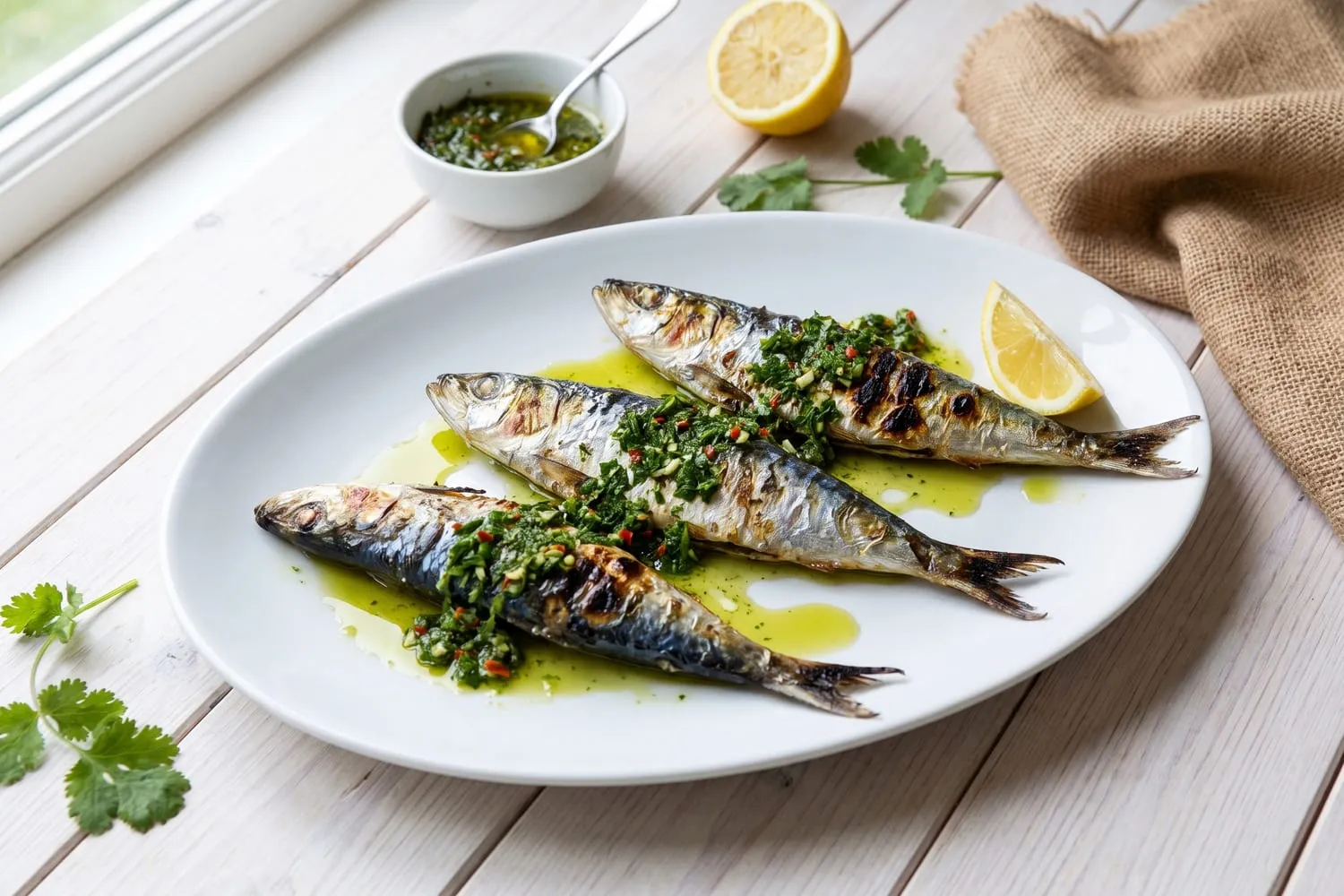
Whole sardines grilled for three or four minutes a side, with a chermoula of coriander, parsley, garlic, cumin, paprika and lemon spooned over the top. The recipe says the chermoula is lovely stirred through couscous, so spoon some over the bulgur wheat counted below as well.
Dinner (side): Bulgur wheat (150g cooked) (125 calories, 5g protein, 7g fibre)
Snack: Roast Garlic and Butter Bean Dip (148 calories, 4g protein, 3g fibre)
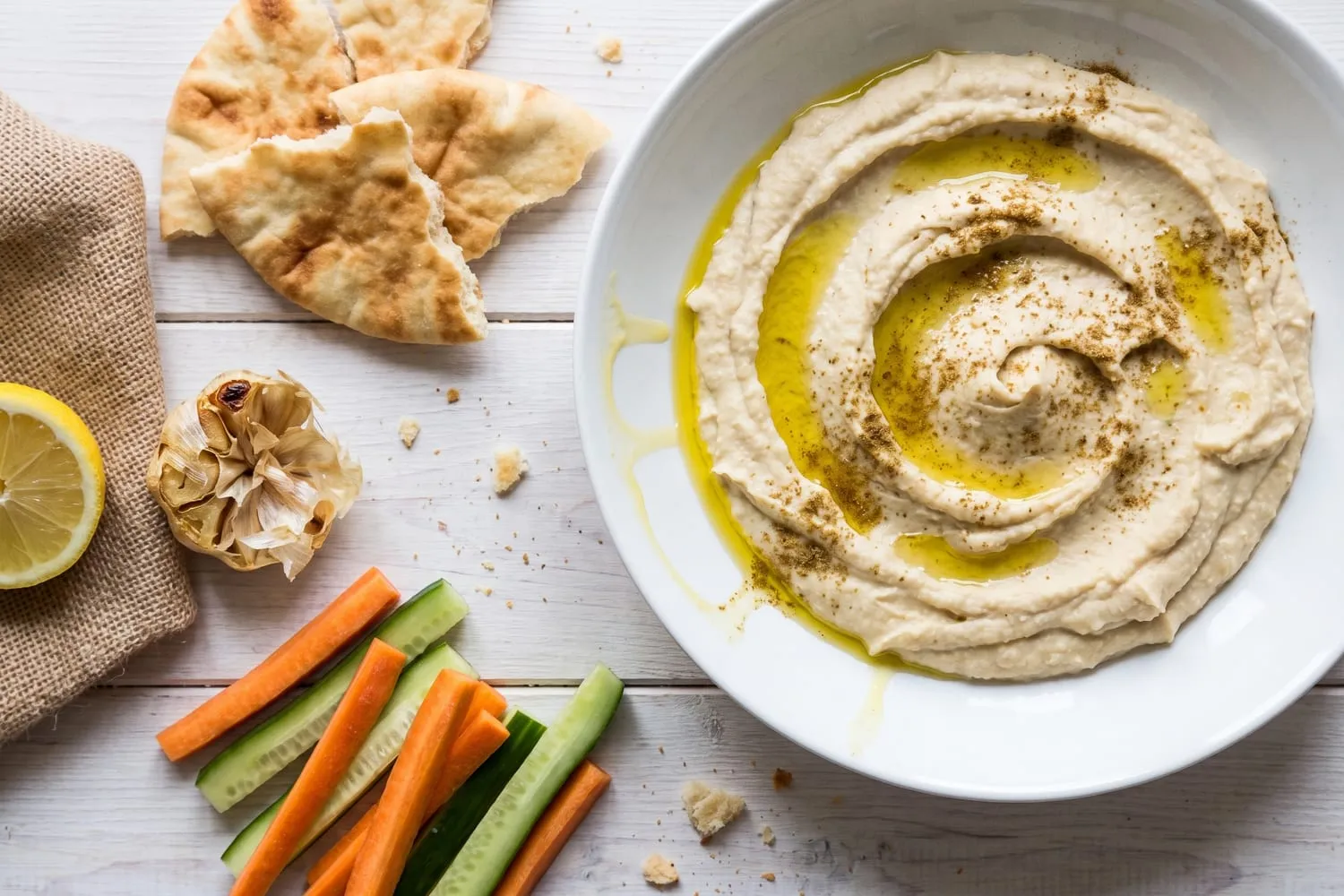
Butter beans blended with a whole head of roasted garlic, tahini and lemon until silky. It keeps for three to four days in the fridge, which covers the snacks on days six and seven too.
Snack: Carrot sticks (80g) (33 calories, 1g protein, 2g fibre)
Day 4 total: 1,661 calories, 74g protein, 30g fibre
Mediterranean Meal Plan: Day 5
Breakfast: 3x Spanish Style Egg Muffins (354 calories, 24g protein, 2g fibre)
A fresh batch of the egg muffins.
Lunch: Calamari and Chickpea Salad (449 calories, 29g protein, 11g fibre)
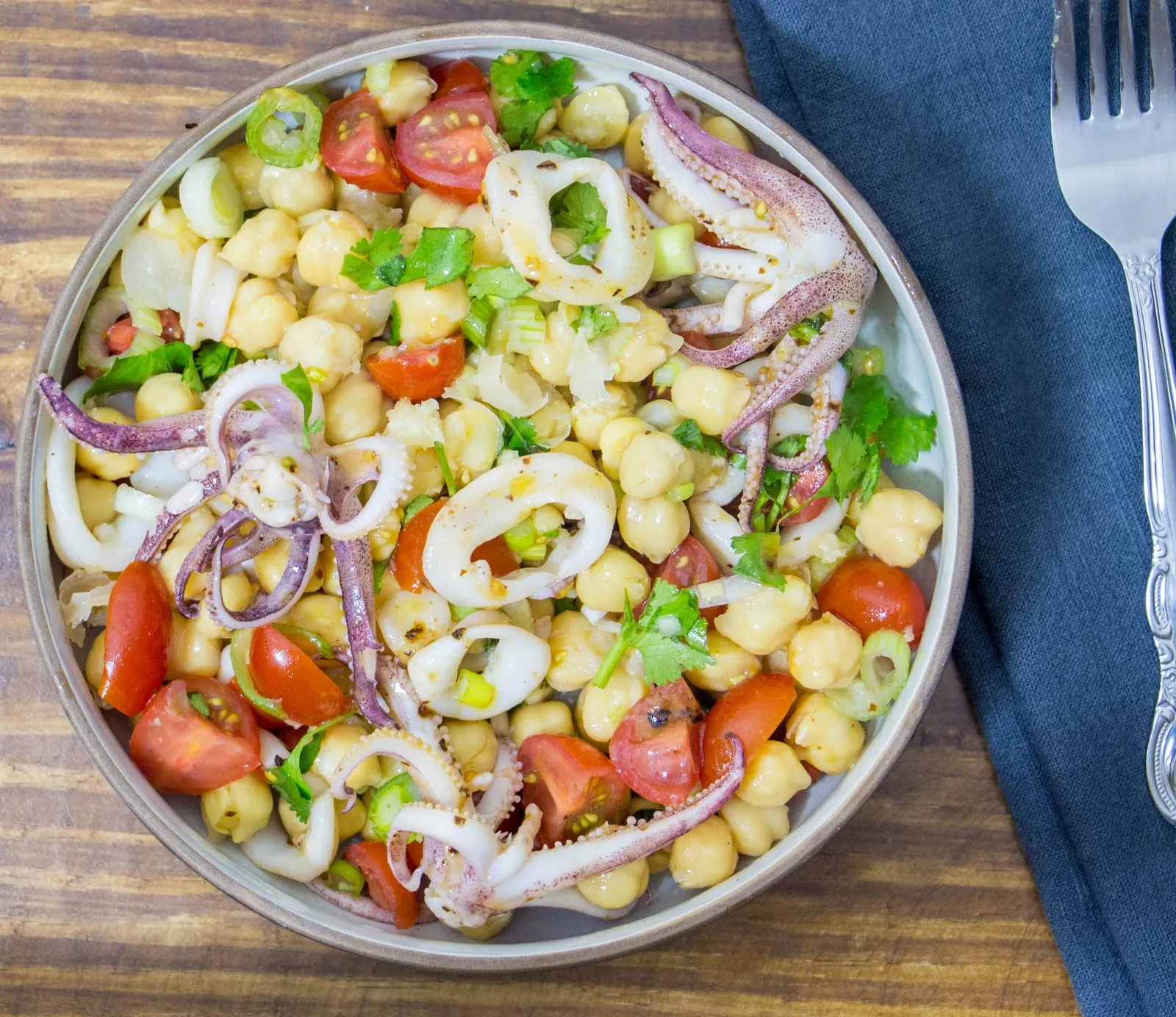
Squid flash-fried with chilli flakes for a couple of minutes, then tossed with chickpeas, tomatoes, spring onions and parsley. I adore calamari, and the recipe keeps in the fridge until the next day, so cook it the evening before.
Dinner: Anchovy, Tomato and Caper Spaghetti (602 calories, 21g protein, 7g fibre)
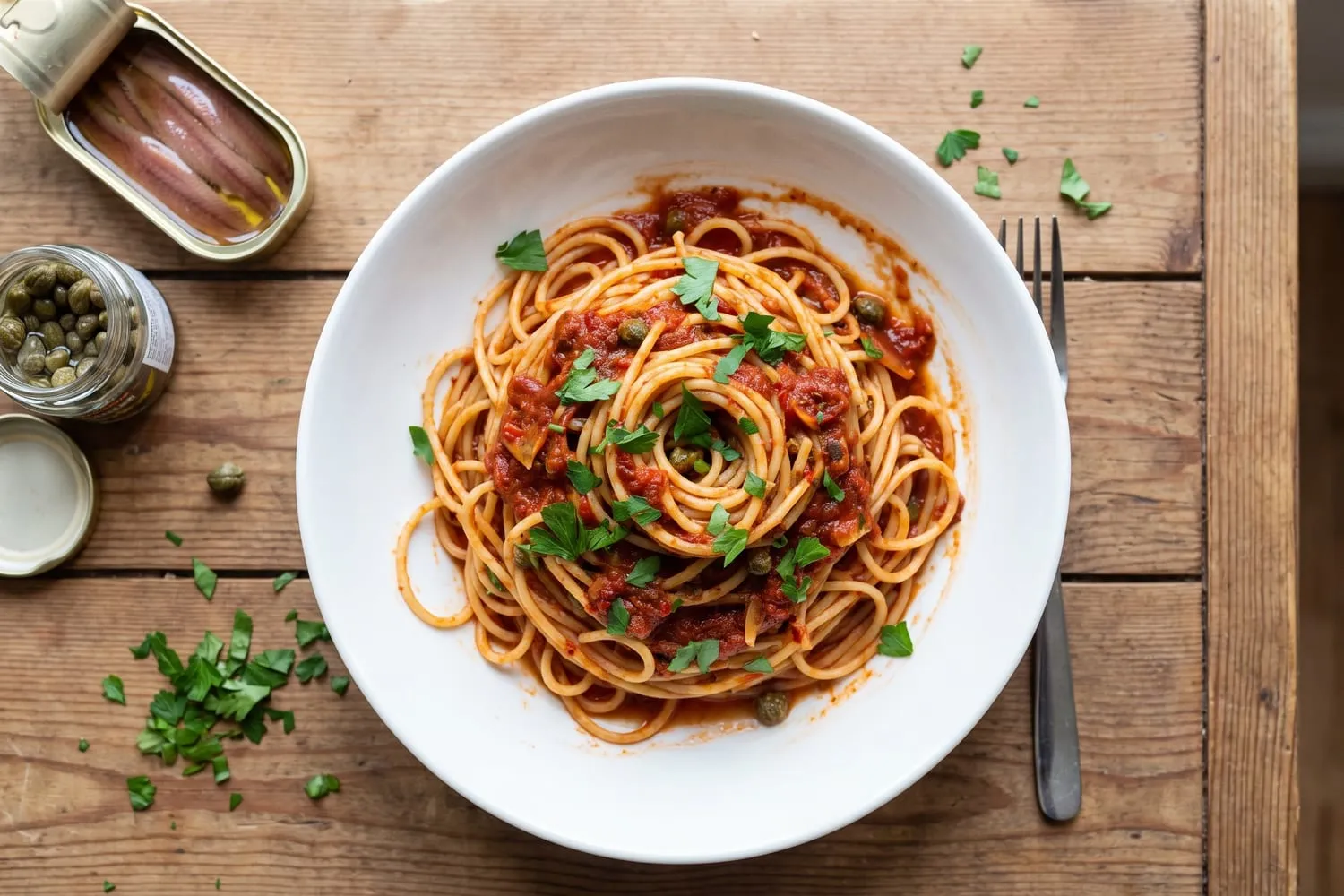
By day five, a Friday, the fridge is looking bare and dinner comes out of the cupboard. Anchovies melt into olive oil with garlic before the tomatoes, capers and chilli go in, and by the end they don’t taste fishy at all, just deeply savoury. It’s on the table in about twenty minutes.
Snack: Tuna and White Bean Pâté, leftovers from Day 4 (159 calories, 10g protein, 2g fibre)
The last of yesterday’s pâté.
Snack: Carrot sticks (80g) (33 calories, 1g protein, 2g fibre)
Day 5 total: 1,597 calories, 83g protein, 24g fibre
Mediterranean Meal Plan: Day 6
Breakfast: Boiled eggs with feta, olives, tomato and cucumber (355 calories, 20g protein, 3g fibre)
Two boiled eggs with feta, green olives, tomato and cucumber and a trickle of olive oil, which takes as long as the eggs do. No bread and nothing sweet, so it works for Matt too.
Lunch: 2x Moroccan Stuffed Sweet Potato Skins (442 calories, 18g protein, 17g fibre)
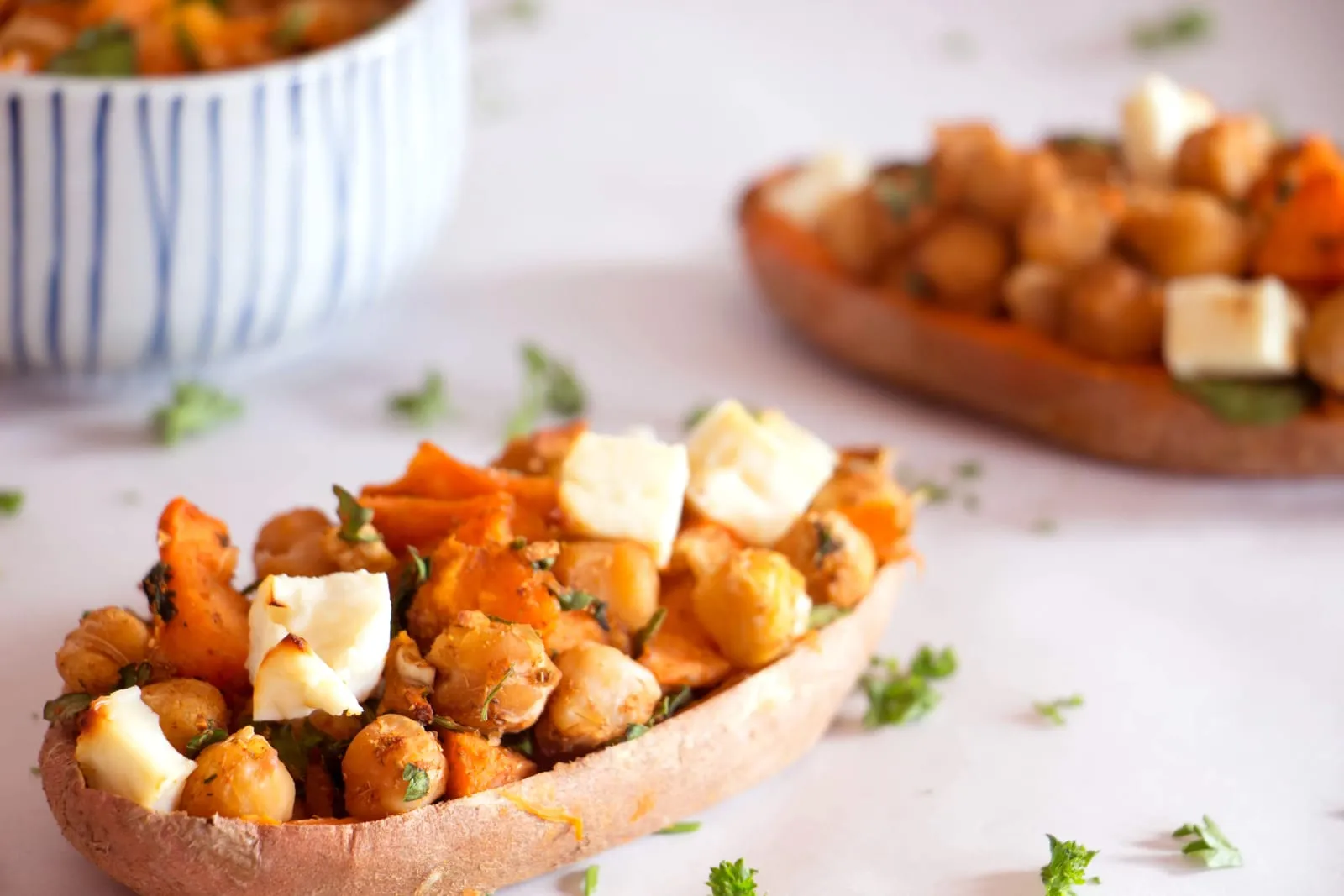
Sweet potatoes roasted whole, scooped out and mixed with chickpeas, cumin, coriander and paprika, then piled back into their skins with feta. The recipe makes four halves, so two each is one sweet potato a person.
Dinner: Cous Cous and Roasted Vegetable Stuffed Tomatoes (447 calories, 15g protein, 7g fibre)
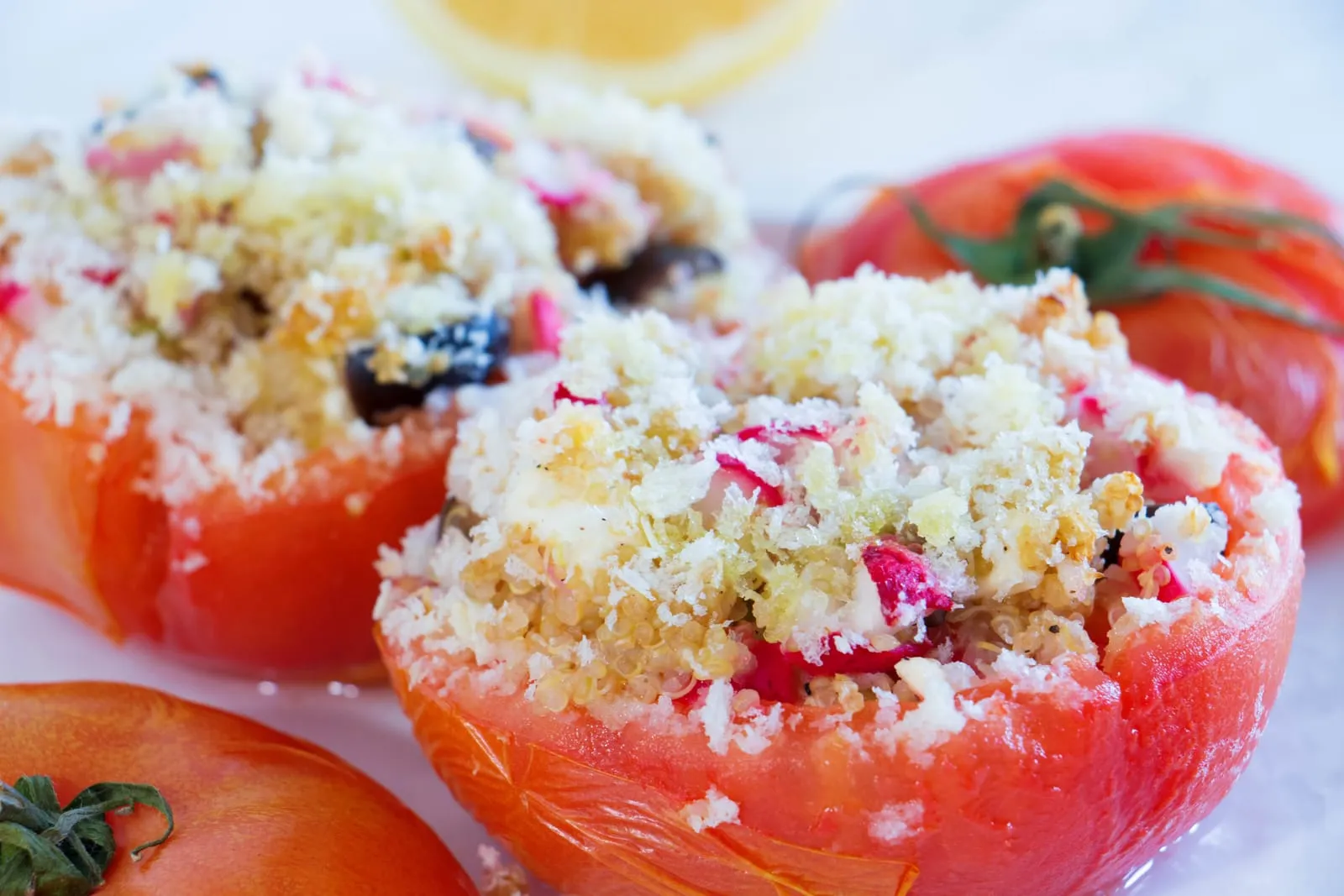
Big tomatoes hollowed out and filled with couscous, radishes, celery, red onion, black olives and feta, with breadcrumbs on top. They roast in about fifteen minutes, and I like them hot or cold.
Dinner (side): Garlic and Thyme Roasted Mushrooms (132 calories, 5g protein, 2g fibre)
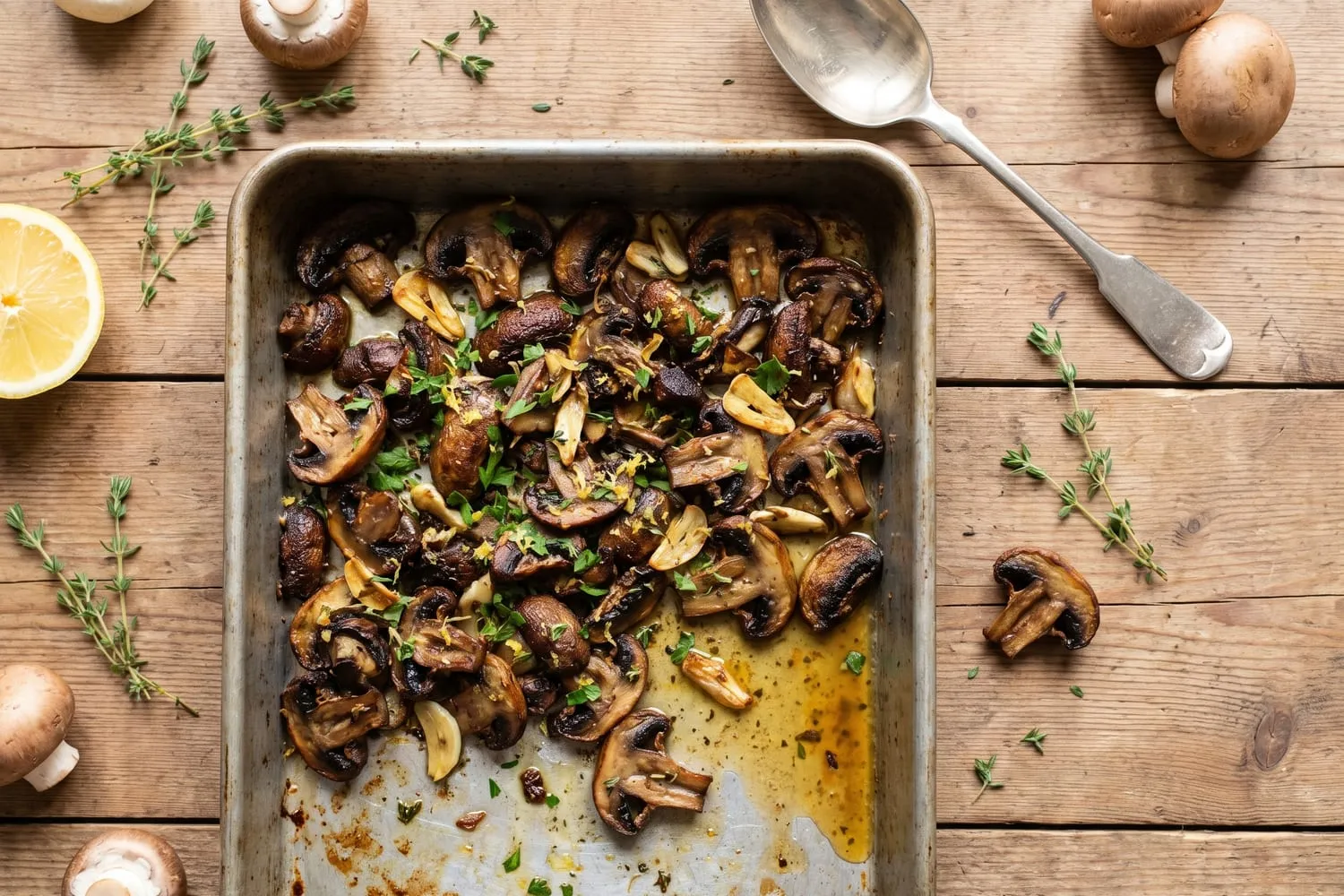
Mushrooms roasted until they brown at the edges, with garlic and thyme added for the last ten minutes and lemon zest at the end. Brush them clean rather than washing them, and make enough for tomorrow’s breakfast.
Snack: Roast Garlic and Butter Bean Dip, leftovers from Day 4 (148 calories, 4g protein, 3g fibre)
More of the butter bean dip from day four.
Snack: Carrot sticks (80g) (33 calories, 1g protein, 2g fibre)
Day 6 total: 1,557 calories, 62g protein, 33g fibre
Mediterranean Meal Plan: Day 7
Breakfast: Garlic and Thyme Roasted Mushrooms, leftovers from Day 6 (132 calories, 5g protein, 2g fibre)
The recipe says leftovers are very good on toast the next morning. Matt won’t eat bread first thing, so here they go with two fried eggs instead.
Breakfast: 2 eggs, fried in a teaspoon of olive oil (201 calories, 14g protein, 0g fibre)
Lunch: Pan-Fried Sardine Fillets on Toast (386 calories, 20g protein, 0g fibre)
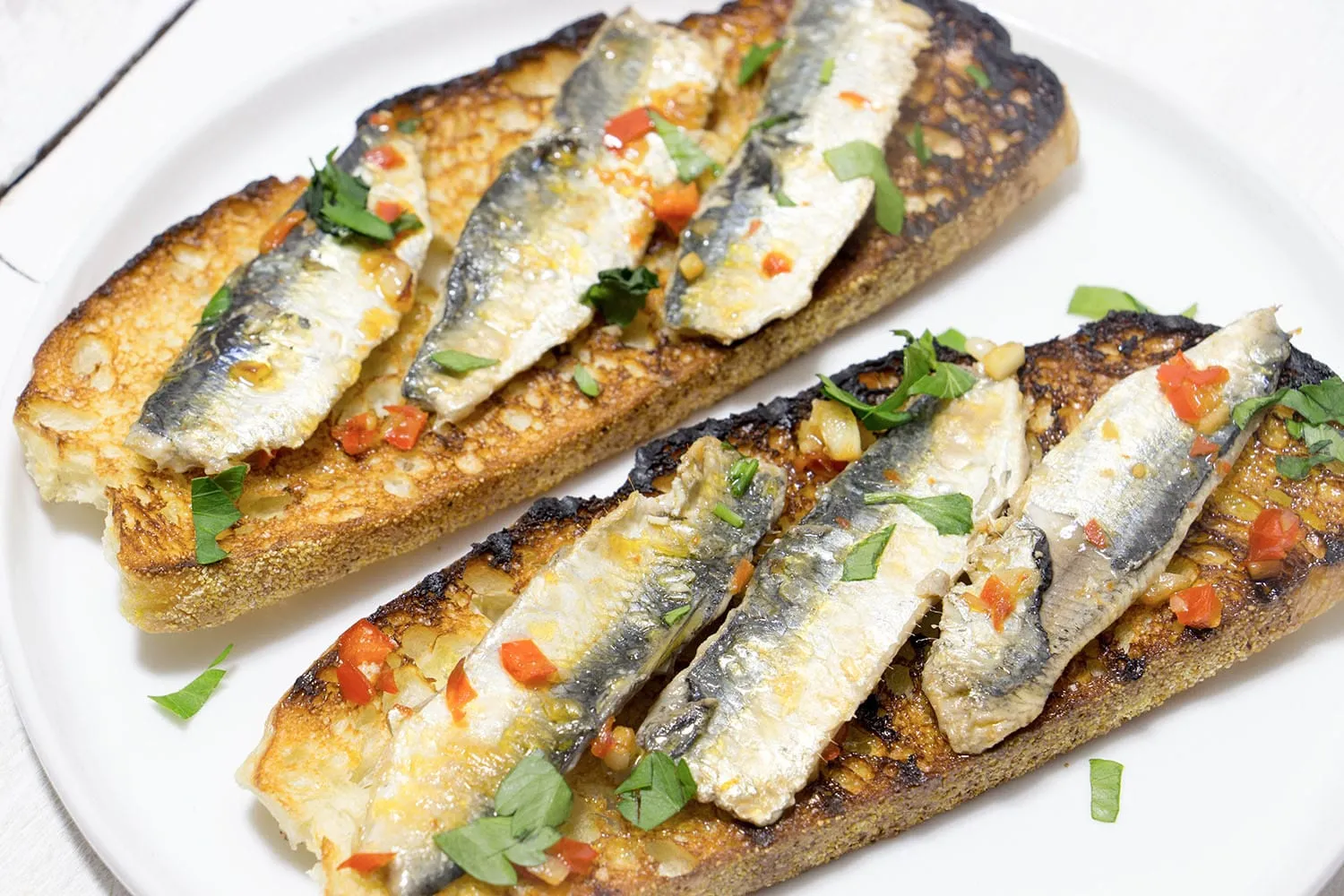
Fresh sardine fillets brushed with lemon and olive oil, then fried skin side down with garlic and chilli for about three minutes. Ask the fishmonger to fillet them if you’d rather not do it yourself. The card leaves out the toast, so two slices of wholemeal each are counted separately.
Lunch (side): 2 slices of wholemeal toast (181 calories, 9g protein, 4g fibre)
Dinner: Mediterranean Fish Stew (306 calories, 22g protein, 6g fibre)
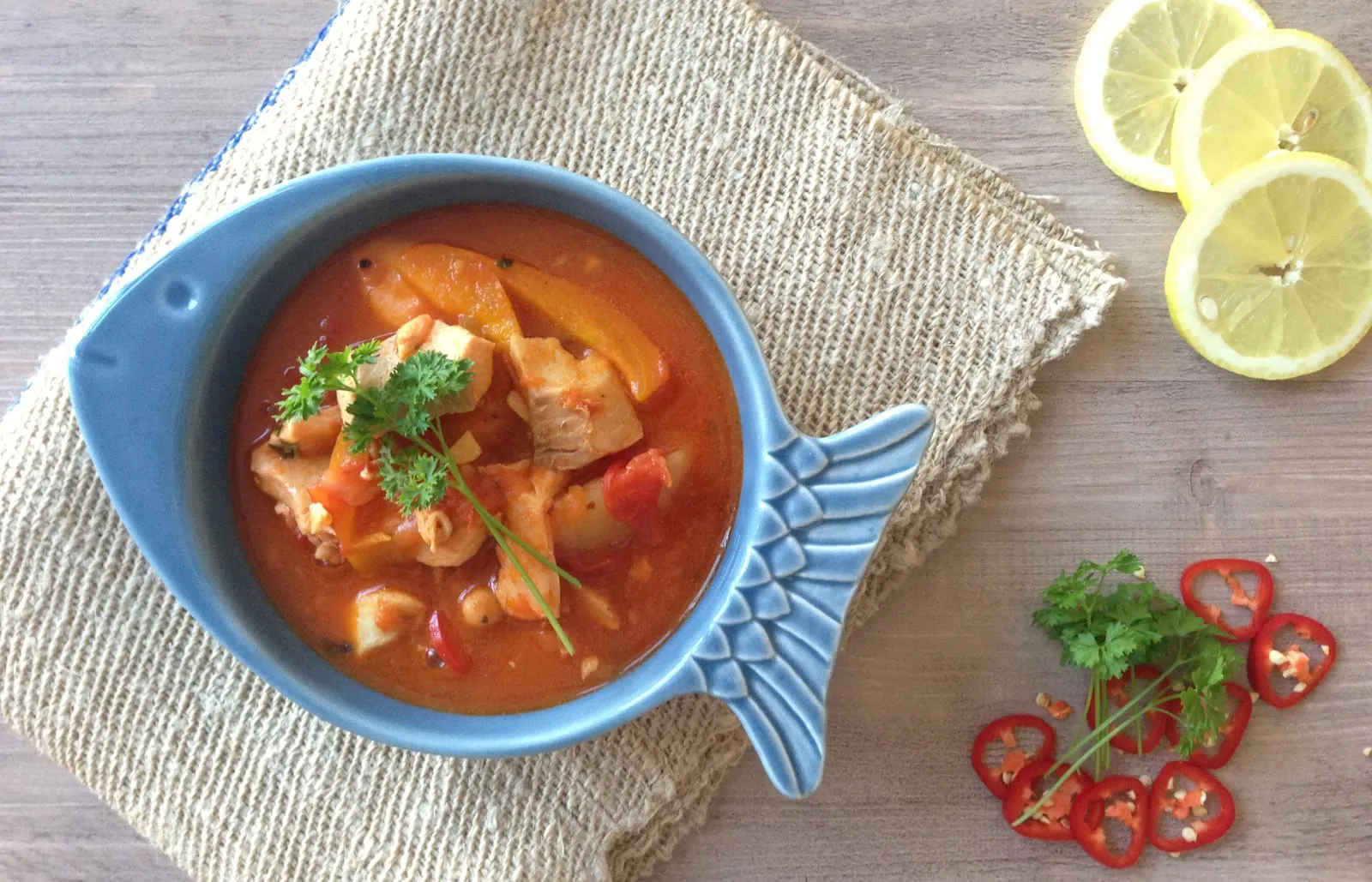
Salmon, haddock and smoked cod simmered in one big pot with potatoes, peppers, chickpeas, tomatoes and white wine. It makes four portions, so the other two go into tubs for Monday’s lunch, well inside the FSA’s 48 hours. The recipe serves it with grilled ciabatta, and wholemeal bread is counted here instead.
Dinner (side): 2 slices of wholemeal bread (181 calories, 9g protein, 4g fibre)
Snack: Roast Garlic and Butter Bean Dip, leftovers from Day 4 (148 calories, 4g protein, 3g fibre)
The last of the butter bean dip.
Snack: Carrot sticks (80g) (33 calories, 1g protein, 2g fibre)
Day 7 total: 1,568 calories, 83g protein, 22g fibre
Mediterranean Meal Plan Shopping List
This covers the full week for two people. It assumes you already have olive oil, salt and pepper, dried spices, honey and tomato purée. The red pepper dip and the overnight oats make a little more than the week needs, the dip freezes, and the last two portions of fish stew are Monday’s lunch, so nothing has to go to waste. If anyone in your house skips the sweet breakfasts like Matt does, add six more eggs (and a few more peppers and tomatoes) for an extra batch of egg muffins.
| Item | Quantity |
|---|---|
| Pollock fillets, skin on | 4 (about 600g) |
| Live mussels | 1.5kg |
| Whole sardines, gutted and scaled | 8 |
| Fresh sardines, for filleting | 6 (about 225g), or 12 fillets |
| Squid (calamari), cleaned | 225g |
| Salmon fillet | 100g |
| Haddock fillet | 100g |
| Smoked cod fillet | 100g |
| Tuna in spring water | 2 x 145g tins |
| Anchovy fillets in olive oil | 1 small tin (you need 8 fillets) |
| Eggs | 26 large |
| Low-fat Greek yoghurt | 1 x 500g pot (you need 300g) |
| Whole milk | 1 pint |
| Feta | 2 x 200g blocks (you need about 220g) |
| Mozzarella | 1 x 125g ball |
| Crème fraîche | 1 small pot |
| Butter | 30g |
| Wholemeal bread | 1 x 800g loaf |
| Wholemeal pittas | 1 pack (you need 4) |
| Dried breadcrumbs | 1 small tub (you need about 100g) |
| Fresh white breadcrumbs | 50g (about 2 slices of white bread) |
| Spaghetti | 200g |
| Couscous | about 50g dry |
| Bulgur wheat | about 150g dry (for 600g cooked) |
| Rolled oats | 150g |
| Chickpeas | 5 x 400g tins (the fish stew needs 100g of the last one) |
| Cannellini beans | 3 x 400g tins |
| Butter beans | 1 x 400g tin |
| Chopped tomatoes | 3 x 400g tins (you need 2 and a half) |
| Capers | 1 small jar |
| Olives | 1 small jar each of black and green |
| Tahini | 1 jar |
| Walnuts | 150g |
| Almonds | 1 small bag (you need 40g) |
| Saffron threads | 1 small pot |
| Cocoa powder and desiccated coconut | a spoonful of each |
| Fish stock pot | 1 |
| Dry white wine | 300ml |
| Lemons | 10 (unwaxed, as a few are zested) |
| Oranges | 2 |
| Blueberries | 2 x 125g punnets |
| Banana | 1 small |
| Cherry tomatoes | 4 x 250g punnets |
| Large tomatoes, for stuffing | 4 |
| Vine tomatoes | 700g |
| Red peppers | 5 |
| Green pepper | 1 |
| Orange or yellow pepper | 1 |
| Aubergines | 2 |
| Sweet potatoes | 2 |
| Floury potato (Maris Piper) | 1 large (about 250g) |
| Mixed mushrooms | 550g |
| Fennel | 1 bulb |
| Carrots | 1kg bag |
| Cucumber | 1 |
| Celery | 1 head (you need 2 sticks) |
| Radishes | 1 bunch |
| Onions | 2 |
| Red onion | 1 small |
| Shallots | 5 |
| Spring onions | 2 bunches |
| Garlic | 5 bulbs |
| Chillies | 1 red, 1 green |
| Fresh flat-leaf parsley | 3 large bunches |
| Fresh coriander | 1 bunch |
| Fresh basil | 1 small pot |
| Fresh thyme | 1 small pack |
Frequently asked questions
Is the Mediterranean diet pescatarian?
Not strictly. The BHF describes it as including moderate amounts of lean protein such as oily fish, white meat and low-fat dairy, with less red and processed meat. But it already leans so heavily on fish, beans and vegetables that leaving the meat out barely changes it, which is why it adapts so easily to a pescatarian diet (sometimes called a pesco-Mediterranean diet). If you’re new to the idea, our FAQ on what a pescatarian is covers the basics.
How much fish should you eat on a Mediterranean diet?
The BHF doesn’t give a number, only that the diet typically includes more fish and less meat. For an actual figure, the NHS recommends at least two portions of fish a week, one of them oily, with a portion being about 140g. This Mediterranean diet meal plan with fish on five days goes well past that. Oily fish is the part with an upper limit: there are just under three portions a person here, and the NHS advises no more than two a week for girls and for women who are pregnant, breastfeeding or may have a child one day.
Can you follow a Mediterranean diet on a budget?
Yes, and a lot of this week is cheaper than it looks. The BHF includes tinned and frozen vegetables and dried and canned beans in its list of foods to eat, and the backbone of this plan is tins: chickpeas, cannellini and butter beans, tomatoes, tuna and anchovies. Pollock costs a fraction of the price of cod, sardines are still one of the cheapest things on the fish counter, and the anchovy spaghetti costs a couple of pounds for two. The saffron is the expensive part of the mussels, but a large pinch is all you need.
Is a pescatarian Mediterranean diet healthy?
According to the BHF, studies have long linked the Mediterranean diet to a lower risk of heart disease, stroke and type 2 diabetes, and in the PREDIMED trial people at high risk of cardiovascular disease were less likely to have a heart attack or stroke on it than on a low-fat diet. A pescatarian version keeps all the main parts of that pattern: vegetables, beans, wholegrains, olive oil, nuts and fish. The NHS says oily fish is high in omega-3 fats, which can help to keep your heart healthy. None of that makes one week a treatment for anything, though, so if you have a health condition, talk to your GP before you change how you eat.
If you want another week after this one, our 7-day pescatarian meal plan and high protein meal plan are the next places to look.